Turmeric-Derived Mitochondria Reverse Age-Related Brain Decline in Mice
A new study in Translational Neurodegeneration found that mitochondria isolated from common edible plants - turmeric, ginger, garlic, and aloe - can survive digestion and travel from the gut into the brain when taken orally. This didn't happen in young mice, but in aged mice, whose naturally weakened blood-brain barrier let the plant mitochondria through.
The brain's protective barrier becomes more permeable with age, and this study suggests that may not be purely a vulnerability. Once past the barrier, plant mitochondria were taken up almost exclusively by microglia, the brain's resident immune cells, via a receptor called TREM2.
Inside microglia, the turmeric-derived mitochondria physically fused with the cell's own aging mitochondria. They delivered plant-specific microRNAs that dialed down two components of the electron transport chain, reducing a damaging process called reverse electron transport. This resulted in less oxidative stress, and more usable ATP.
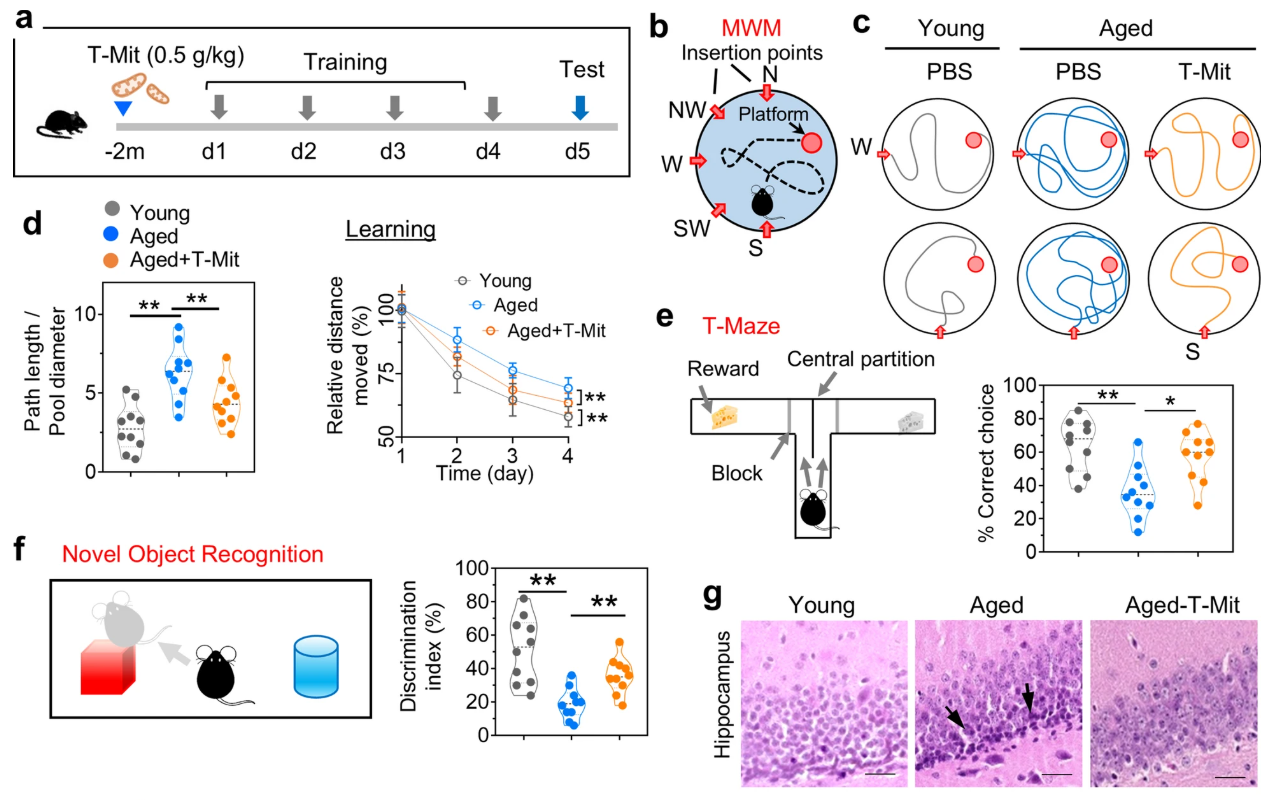
Image taken from Teng, Luo, Xu et al.
Measurable Cognitive Improvement & Relevance to Human Aging
Aged mice given turmeric mitochondria orally for two months showed reduced neuronal loss, fewer markers of cellular senescence, and meaningfully better performance across three separate memory and learning tests compared to untreated aged mice of the same age.
The researchers also examined human brain tissue and found the same pattern in older individuals (excess reverse electron transport, oxidative stress, and low ATP in microglia) suggesting this isn't just a mouse phenomenon, and that the underlying biology may translate.
This is early-stage animal research, but it opens an intriguing new angle on healthy aging. Rather than replacing damaged mitochondria directly, certain everyday plant foods may supply molecular "instructions" that help reprogram our own aging mitochondria from within.
Source: Teng, Luo, Xu et al., Translational Neurodegeneration, 2026. Plant-derived mitochondria mitigate aging-related neurodegeneration by reprogramming microglial mitochondrial energy metabolism. DOI: 10.1186/s40035-026-00565-1