A Hidden Driver of Mitochondrial Aging
New research from the Leibniz Institute on Aging (FLI) in Jena, Germany, has identified a previously overlooked contributor to mitochondrial decline: falling levels of phosphatidylcholine, a key membrane lipid. Published in Nature Communications, the study found that as this lipid decreases with age, mitochondrial membranes lose the flexibility needed for fusion — the process that lets mitochondria network together to share energy, metabolites, and repair resources.
Why Mitochondrial Networks Matter
Healthy mitochondria don't function in isolation - they form dynamic, interconnected networks that let cells balance energy resources and swap out damaged components. As phosphatidylcholine declines, this network becomes fragmented and less efficient. The result is reduced metabolic flexibility, a cell's ability to adapt quickly to changing energy demands, now recognized as a hallmark of aging and a factor linked to conditions like diabetes.
The team combined experiments in C. elegans, human cell cultures, and large-scale clinical datasets to trace this mechanism across species. Suppressing phosphatidylcholine production in young worms rapidly aged their mitochondria to resemble those of much older animals. The findings also suggest aging may unfold in stages - starting with reduced stress resistance and protein instability, followed by metabolic disruption, with epigenetic changes emerging later.
The most notable finding was that supplementing older worms with phosphatidylcholine, or its precursor choline, restored more youthful mitochondrial structure within just two days - and remained effective even when introduced in mid or late life. This points to mitochondrial aging as, in part, a modifiable process rather than a purely irreversible one.
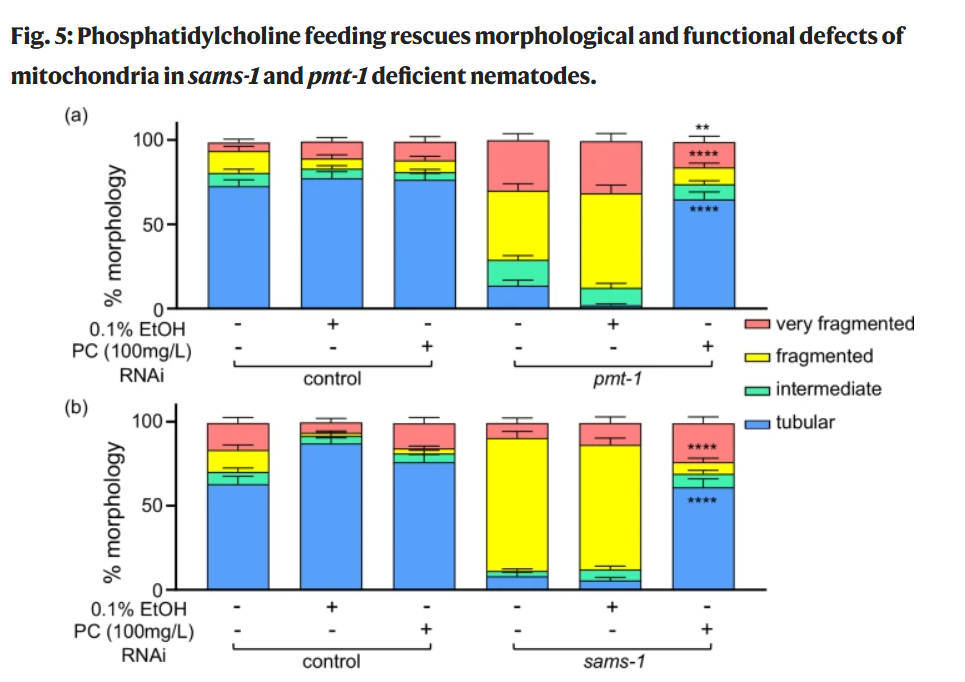
Image taken from Poliezhaieva et al., 2026.
A Menopause Connection
Human metabolomic data revealed a particularly steep drop in phosphatidylcholine among women around menopause, a period when many report a marked decline in energy and persistent fatigue - offering a possible molecular explanation for this common experience.
What This Means for Healthy Aging
Translating these findings into human therapies will require further research, but the results add to growing evidence that nutritional strategies supporting mitochondrial membrane health could play a meaningful role in preserving cellular energy and function later in life.
Source: Poliezhaieva et al., Nature Communications, 2026. Aging-associated decline of phosphatidylcholine synthesis is a malleable trigger of natural mitochondrial aging. DOI: 10.1038/s41467-026-71508-7