Mitochondria-Targeted Antioxidants: MitoQ, SkQ1, and SS-31
What you'll learn
What mitochondria-targeted antioxidants (MTAs) are and how they differ from conventional antioxidants
Why mitochondria are difficult for antioxidants to reach, and how delivery technologies solve this
The role of ROS, oxidative stress, and the Nrf2 pathway in mitochondrial health and aging
The main types of MTAs — lipophilic cation-targeted compounds, peptide-based antioxidants, and mitochondrial support compounds
How MitoQ, SkQ1, MitoTEMPO, SS-31 (elamipretide), and PQQ compare in mechanism and human clinical evidence
Which compounds currently have the strongest clinical research behind them
What are mitochondria-targeted antioxidants?
Mitochondria-targeted antioxidants (MTAs) are compounds designed to reduce oxidative stress within the mitochondria. Unlike conventional antioxidants, which are distributed systemically throughout the body, mitochondrially targeted antioxidants are designed to either accumulate within the mitochondria or support mitochondrial defence systems directly.
As we age, our mitochondrial function declines, in fact, mitochondrial dysfunction is a key hallmark of aging.¹,² With that decline, leads to an increase in the production of reactive oxygen species (ROS), impaired energy (ATP) production, cellular dysfunction, and greater oxidative stress.¹,³ Mitochondrial dysfunction is associated with numerous diseases of aging, including neurodegenerative disorders, cardiovascular disease, and cancer.² Mitochondria-targeted antioxidants aim to protect mitochondria from the damage, and preserve cellular function with age.
Why are mitochondria hard to reach?
Getting any foreign molecules e.g., drugs, nutrients, or antioxidants into mitochondria is surprisingly difficult. The compound has to first survive digestion, enter the blood stream, pass through the cellular membrane, and then cross through the mitochondrial membranes. Mitochondria have two tightly-controlled membranes and many antioxidants lack the ability to pass through these and accumulate inside.
For example, conventional Coenzyme Q10 (CoQ10) has low bioavailability⁹ and lacks a dedicated transport mechanism into the mitochondria, meaning only a small portion of the CoQ10 supplements you take will reach the site of oxidative stress. This challenge has driven the development of mitochondrial-targeting technologies that act like cellular delivery systems.
Why do mitochondria need antioxidants?
Mitochondria are responsible for generating cellular energy (ATP). To do this, they move electrons through a series of protein structures on their inner membrane called the electron transport chain (ETC). This process is highly efficient; however, a small proportion of electrons escape and react with oxygen to form reactive oxygen species (ROS).¹,³
Mitochondria have an innate antioxidant defence system designed to keep ROS levels in check. When oxidative stress increases, cells activate protective pathways, including the nuclear factor erythroid 2-related factor 2 (Nrf2) pathway.⁴ Nrf2 acts as a cellular stress sensor, switching on genes that support antioxidant defences and cellular resilience.⁵,⁶ This leads to the production of antioxidant enzymes such as superoxide dismutase (SOD), catalase, and glutathione peroxidase, which help neutralise excess ROS and maintain redox balance.⁴,⁵,⁶
In small amounts, ROS are not inherently harmful. In fact, ROS are important signalling molecules that help regulate cellular adaptation, exercise responses, and repair processes.⁷ Problems arise when ROS production exceeds the cell's antioxidant capacity, resulting in oxidative stress. Over time, oxidative stress can damage lipids, proteins, mitochondrial DNA, and cellular membranes, potentially impairing mitochondrial function and contributing to age-related cellular decline.¹,²
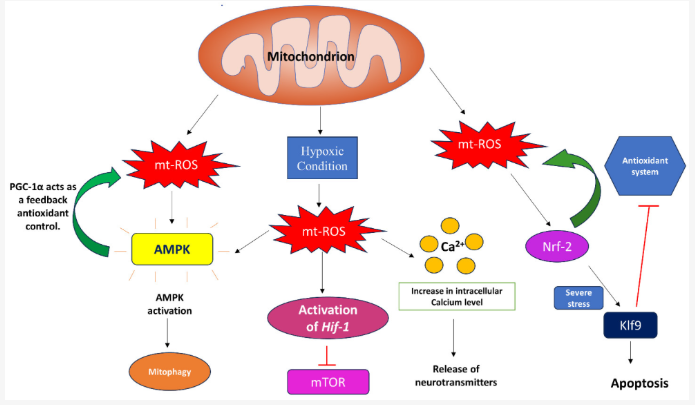
Image taken from Mukherjee et al., 2024 - mt-ROS is crucial in many signaling pathways. Here, in the diagram, we have shown how, under hypoxic conditions and normal physiological conditions, mt-ROS aids in regulation of transcription factors, release of neurotransmitters, apoptosis, mitophagy, and antioxidant system.
Mitochondria-targeted antioxidants vs regular antioxidants
Traditional antioxidants like vitamin C, vitamin E, and standard CoQ10 act throughout the entire body and can help neutralize free radicals in many tissues. However, only a small amount will reach the mitochondrial directly.⁹ Mitochondria-targeted antioxidants are designed specifically to concentrate within mitochondria or interact indirectly with mitochondria structures.
Types of mitochondria-targeted antioxidants
Not all mitochondrial antioxidants work in the same way, even though they have the same goal, reaching the mitochondria. There are multiple innovations in types of delivery systems.
Lipophilic cation-targeted antioxidants
Mitochondria create energy through a natural electrical gradient between the inner and outer membrane, also known as the mitochondrial membrane potential (MMP). These compounds use a positively charged moiety, commonly triphenylphosphonium (TPP+). These groups are positively charged and work by exploiting the negative charge of the mitochondrial membrane. TPP+ linkers allow the attached molecule to be pulled through the mitochondrial membrane, and accumulate within the organelle at concentrations hundreds of times higher than elsewhere in the cell.¹
Examples include:
MitoQ Mitoquinol Mesylate (Ubiquinol + TPP+)
SkQ1 (plastoquinone + TPP+)
MitoTEMPO (TEMPO + TPP+)
(MitoQ) Mitoquinol Mesylate is one of the best-studied examples of mitochondria antioxidants with over 1,100 preclinical articles and 30+ humans clinical trials completed. It combines ubiquinol (CoQ10) with a TPP+ carrier to improve mitochondrial uptake and reduce oxidative stress markers e.g., DNA damage, ROS production, lipid peroxidation.¹³,¹⁴,¹⁵,¹⁶ SkQ1 utilizes plastoquinone, which is an analogue of CoQ10 found in the chloroplasts of plants.
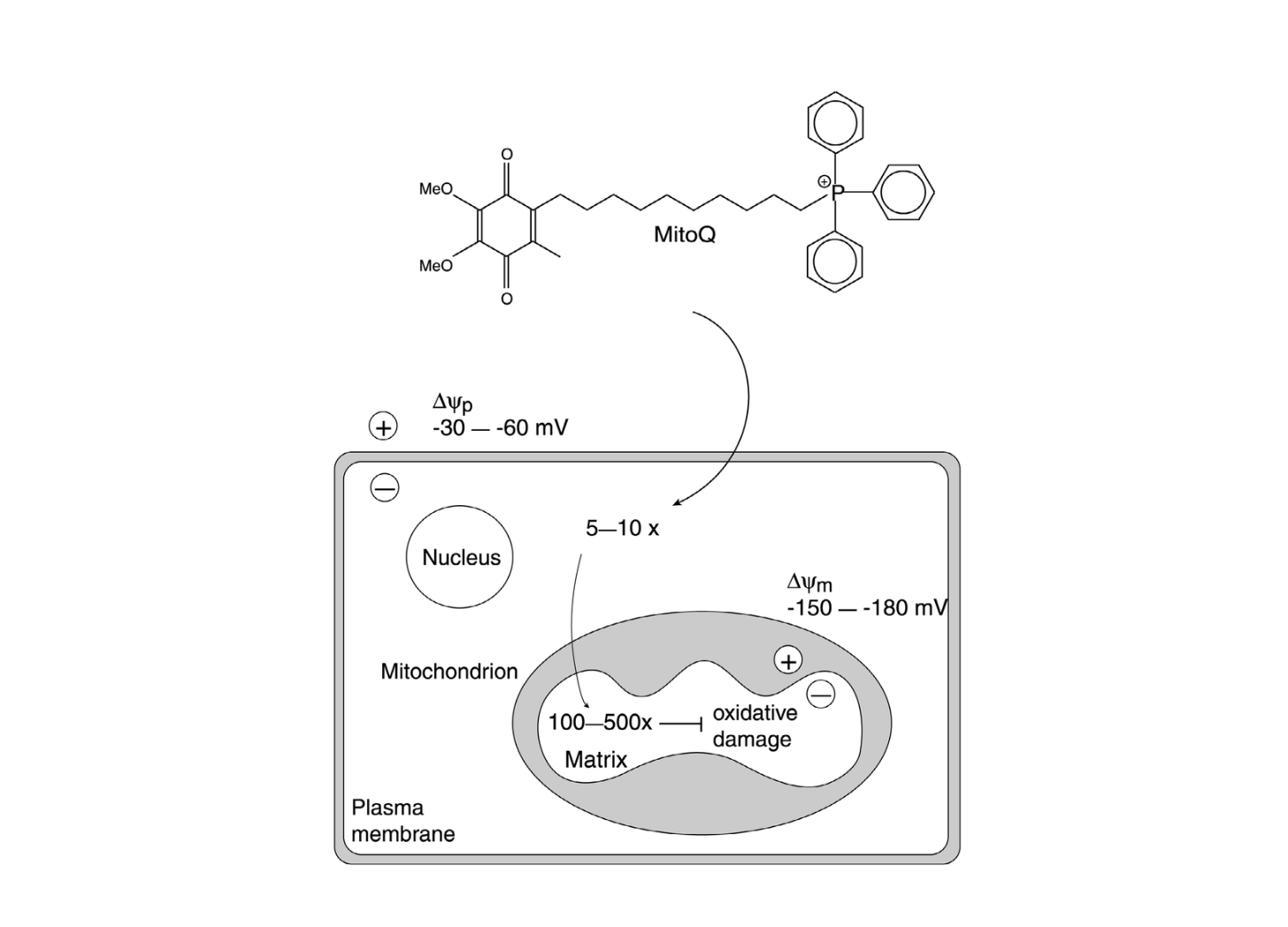
Schematic diagram illustrating the selective uptake of MitoQ into the cytoplasm driven by the plasma membrane potential (∆ψ p ) and its subsequent further accumulation by mitochondria driven by the mitochondrial membrane potential (∆ψ m ). Within mitochondria, this several-hundredfold accumulation of MitoQ relative to its concentration in the external fluid will protect the organelle from oxidative damage far more effectively than untargeted antioxidants.
Peptide-based mitochondrial antioxidants
Instead of relying on electrical attraction to enter the mitochondria, some compounds use short peptides the indirectly interact with the mitochondrial membrane. These peptides are designed to accumulate within mitochondria and support mitochondrial function by protecting membrane integrity and reducing oxidative damage.
SS-31 (elamipretide) is a mitochondria-targeted tetrapeptide that selectively binds to cardiolipin, a unique phospholipid found in the inner mitochondrial membrane.⁸ By stabilising cardiolipin and supporting the structure of the electron transport chain, SS-31 may help improve mitochondrial efficiency and reduce the excessive production of reactive oxygen species (ROS). Unlike traditional antioxidants, its primary mechanism is thought to involve preserving mitochondrial membrane function and optimising energy production, rather than directly scavenging free radicals.
Mitochondrial support compounds
Some compounds indirectly support mitochondrial redox although not being directly targeted to the mitochondria. These compounds may help maintain antioxidant defences, support mitochondrial quality control pathways, or promote the production of cellular antioxidants that protect mitochondria from oxidative stress.
Examples include coenzyme Q10 (CoQ10), alpha-lipoic acid, N-acetylcysteine (NAC), and plant-derived polyphenols such as resveratrol. Many of these compounds can activate cellular stress-response pathways, including Nrf2, which increases the expression of endogenous antioxidant enzymes such as superoxide dismutase (SOD), catalase, and glutathione peroxidase.⁴,⁵,⁶ Others support glutathione synthesis or mitochondrial biogenesis, helping cells maintain healthy mitochondrial function and resilience in the face of oxidative stress.
PQQ (pyrroloquinoline quinone)
Pyrroloquinoline quinone (PQQ) is a redox-active compound that has attracted interest for its potential role in supporting mitochondrial health.¹⁰ Unlike mitochondria-targeted antioxidants, PQQ does not selectively accumulate within mitochondria. Instead, it appears to support cellular resilience through its effects on mitochondrial signalling pathways, antioxidant defences, and mitochondrial biogenesis.¹¹,¹²
Research suggests that PQQ may help activate cellular pathways involved in the formation of new mitochondria and the maintenance of healthy mitochondrial function.¹² It has also been shown to influence antioxidant and stress-response pathways, including those regulated by Nrf2, which can increase the expression of endogenous antioxidant enzymes such as superoxide dismutase (SOD), catalase, and glutathione peroxidase.¹¹ Through these mechanisms, PQQ may help cells adapt to oxidative stress and support mitochondrial health, although more human research is needed to fully understand its long-term effects and clinical relevance.¹⁰,¹¹,¹²
Clinical evidence for mitochondria antioxidants
MitoQ
MitoQ is currently the most extensively studied mitochondria-targeted antioxidant in humans. Clinical trials have investigated its effects across healthy aging, vascular function, exercise performance, metabolic health, and chronic disease populations. One of the landmark studies in healthy older adults found that 6 weeks of supplementation improved endothelial function and reduced markers of oxidative stress, suggesting a potential role in supporting vascular aging.¹³ Human studies have also reported reductions in exercise-induced oxidative damage and improvements in aspects of physical performance,¹⁴,¹⁵,¹⁶ while a growing body of research continues to explore its effects on mitochondrial function, inflammation, and healthy aging.
SkQ1
Compared with MitoQ, the clinical evidence base for SkQ1 is more limited and has largely focused on ophthalmology. Clinical trials have evaluated SkQ1 ophthalmic solutions for dry eye disease, where improvements in both signs and symptoms of ocular surface dysfunction have been reported.¹⁷,¹⁸ While these studies support the biological activity of mitochondria-targeted antioxidants in humans, there is currently little published clinical evidence evaluating oral SkQ1 supplementation for systemic mitochondrial health, healthy aging, or cardiometabolic outcomes.
MitoTEMPO
MitoTEMPO has demonstrated promising effects in numerous preclinical models of cardiovascular disease, metabolic dysfunction, inflammation, and neurodegeneration.¹⁹ Its ability to selectively reduce mitochondrial superoxide production has made it a valuable research tool for investigating the role of mitochondrial oxidative stress in disease development.¹⁹,²⁰ However, unlike MitoQ, clinical evidence in humans remains extremely limited, and MitoTEMPO is currently used primarily as a research compound rather than a commercially available nutritional supplement or therapeutic agent.
SS-31 (elamipretide)
SS-31 (elamipretide) is one of the most extensively studied peptide-based mitochondrial therapeutics. Clinical trials have investigated its effects in conditions characterised by mitochondrial dysfunction, including primary mitochondrial myopathy, heart failure, and rare mitochondrial diseases.²¹ Although results have varied across studies and indications, clinical research has demonstrated that elamipretide can influence measures of mitochondrial function, exercise tolerance, and patient-reported outcomes.²¹,²² Ongoing research continues to evaluate its therapeutic potential in mitochondrial diseases and age-related declines in mitochondrial function.
PQQ (pyrroloquinoline quinone)
The clinical evidence for PQQ is smaller than that of MitoQ and primarily focuses on biomarkers of mitochondrial function, cognition, sleep quality, and fatigue.¹⁰,¹¹,¹² Human studies suggest that PQQ may influence pathways involved in mitochondrial biogenesis and cellular energy metabolism, while also supporting antioxidant defences.¹¹,¹² However, many studies are relatively small, and further large-scale clinical trials are needed to confirm its effects on mitochondrial health and healthy aging outcomes. At present, the strongest evidence supports PQQ as a mitochondrial support compound rather than a mitochondria-targeted antioxidant.
Although many compounds are described as "mitochondrial antioxidants," the strength of clinical evidence varies considerably. MitoQ currently has the largest body of published human clinical research among mitochondria-targeted antioxidants,¹³,¹⁴,¹⁵,¹⁶ while compounds such as SkQ1, MitoTEMPO, SS-31, and PQQ remain active areas of investigation with differing levels of clinical validation.
FAQs
What is a mitochondria-targeted antioxidant?
A mitochondria-targeted antioxidant (MTA) is a compound specifically designed to accumulate within mitochondria or support mitochondrial defence systems, rather than circulating generally throughout the body like conventional antioxidants. This targeted delivery allows MTAs to intercept oxidative stress closer to where it's generated — within the mitochondria themselves.
How is MitoQ different from regular CoQ10?
Both share the same antioxidant core, but conventional CoQ10 lacks a dedicated transport mechanism into mitochondria, so only a small fraction of what's absorbed ever reaches its target. MitoQ combines ubiquinol (the active form of CoQ10) with a triphenylphosphonium (TPP+) carrier, which is drawn into mitochondria by their strong negative membrane charge, allowing it to accumulate at much higher concentrations inside the organelle.
Are all mitochondria-targeted antioxidants the same?
No. They fall into distinct categories with different delivery mechanisms: lipophilic cation-targeted compounds (MitoQ, SkQ1, MitoTEMPO) use a charged TPP+ carrier; peptide-based antioxidants (SS-31/elamipretide) bind directly to cardiolipin in the inner mitochondrial membrane; and mitochondrial support compounds (like PQQ) don't accumulate in mitochondria at all, but instead influence mitochondrial signalling and biogenesis indirectly.
Which mitochondria-targeted antioxidant has the strongest clinical evidence?
MitoQ currently has the largest body of published human clinical research among mitochondria-targeted antioxidants, spanning vascular aging, exercise performance, and healthy aging populations. SkQ1, MitoTEMPO, SS-31, and PQQ remain active areas of investigation, but with more limited or more narrowly focused human clinical evidence to date.
Is PQQ a mitochondria-targeted antioxidant?
Not in the same sense as MitoQ or SS-31. PQQ doesn't selectively accumulate within mitochondria. Instead, it's better described as a mitochondrial support compound — it appears to influence mitochondrial signalling pathways, antioxidant defences, and mitochondrial biogenesis, though more human research is needed to confirm its long-term effects.
References
Murphy MP. How mitochondria produce reactive oxygen species. Biochemical Journal. 2009;417(1):1-13.
Balaban RS, Nemoto S, Finkel T. Mitochondria, oxidants, and aging. Cell. 2005;120(4):483-495.
Brand MD. The sites and topology of mitochondrial superoxide production. Experimental Gerontology. 2010;45(7-8):466-472.
Ma Q. Role of Nrf2 in oxidative stress and toxicity. Annual Review of Pharmacology and Toxicology. 2013;53:401-426.
Yamamoto M, Kensler TW, Motohashi H. The KEAP1-NRF2 system. Physiological Reviews. 2018;98(3):1169-1203.
Tonelli C, Chio IIC, Tuveson DA. Transcriptional regulation by Nrf2. Antioxidants & Redox Signaling. 2018;29(17):1727-1745.
Merry TL, Ristow M. Do antioxidant supplements interfere with skeletal muscle adaptation? The Journal of Physiology. 2016;594(18):5135-5147.
Birk AV, Chao WM, Bracken C, Warren JD, Szeto HH. Targeting mitochondrial cardiolipin and the cytochrome c/cardiolipin complex. British Journal of Pharmacology. 2014;171(8):2017-2028.
Hargreaves IP. Coenzyme Q10 as a therapy for mitochondrial disease. International Journal of Biochemistry & Cell Biology. 2014;49:105-111.
Stites TE, Mitchell AE, Rucker RB. Physiological importance of PQQ. Journal of Nutrition. 2000;130(4):719-723.
Harris CB, Chowanadisai W, Mishchuk DO, et al. Dietary PQQ alters mitochondrial function and metabolism. Journal of Nutritional Biochemistry. 2013;24(12):2076-2084.
Chowanadisai W, Bauerly KA, Tchaparian E, Wong A, Cortopassi GA, Rucker RB. PQQ stimulates mitochondrial biogenesis. Journal of Biological Chemistry. 2010;285(1):142-152.
Rossman MJ, Santos-Parker JR, Steward CAC, et al. Chronic supplementation with a mitochondrial antioxidant (MitoQ) improves vascular function in healthy older adults. Hypertension. 2018;71(6):1056-1063.
Williamson J, Hughes CM, Cobley JN, et al. MitoQ attenuates exercise-induced mitochondrial DNA damage. Redox Biology. 2020;36:101673.
Broome SC, Woodhead JST, Merry TL, et al. Mitochondria-targeted antioxidant supplementation improves 8 km time trial performance. Journal of the International Society of Sports Nutrition. 2021;18:58.
Pham T, MacRae CL, Broome SC, et al. MitoQ and CoQ10 supplementation mildly suppresses skeletal muscle mitochondrial hydrogen peroxide levels. European Journal of Applied Physiology. 2020;120:1657-1669.
Petrov A, Perekhvatova N, Skulachev M, Stein L, Ousler G. SkQ1 Ophthalmic Solution for Dry Eye Treatment: Results of a Phase 2 Randomized Clinical Trial. Advances in Therapy. 2016;33(1):96-115.
Dikalova AE, Bikineyeva AT, Budzyn K, et al. Therapeutic targeting of mitochondrial superoxide in hypertension. Circulation Research. 2010;107(1):106-116.
Arulkumaran N, Pollen SJ, Tidswell R, et al. Selective mitochondrial antioxidant MitoTEMPO reduces renal dysfunction and systemic inflammation in experimental sepsis. British Journal of Anaesthesia. 2021;127(4):577-586.
Karaa A, Bertini E, Carelli V, et al. Efficacy and safety of elamipretide in individuals with primary mitochondrial myopathy: The MMPOWER-3 randomized clinical trial. Neurology. 2023;101(3):e238-e252.
ClinicalTrials.gov. A Trial to Evaluate Safety and Efficacy of Elamipretide in Primary Mitochondrial Myopathy (NCT03323749).