Mitochondria-targeted antioxidants: Mechanisms, clinical evidence, and applications in mitochondrial dysfunction
What you'll learn
What mitochondria-targeted antioxidants (MTAs) are and how they differ from conventional antioxidants
Why mitochondria are difficult for antioxidants to reach, and how delivery technologies solve this
The role of ROS, oxidative stress, and the Nrf2 pathway in mitochondrial health and aging
The main types of MTAs — lipophilic cation-targeted compounds, peptide-based antioxidants, and mitochondrial support compounds
How MitoQ, SkQ1, MitoTEMPO, SS-31 (elamipretide), and PQQ compare in mechanism and human clinical evidence
Which compounds currently have the strongest clinical research behind them
What are mitochondria-targeted antioxidants?
Mitochondria-targeted antioxidants (MTAs) are compounds specifically designed to reduce oxidative stress within mitochondria, the organelles responsible for cellular energy production.
Unlike conventional antioxidants, which are distributed broadly throughout the body, mitochondria-targeted antioxidants are engineered to accumulate within mitochondria or interact directly with mitochondrial structures. By acting closer to the primary site of reactive oxygen species (ROS) production, these compounds aim to improve mitochondrial redox balance while supporting normal mitochondrial function.
Interest in mitochondria-targeted antioxidants has grown significantly over the past two decades as research has increasingly identified mitochondrial dysfunction and mitochondrial oxidative stress as central features of biological ageing and numerous chronic diseases.¹ ²
Why are mitochondria difficult to target?
Delivering compounds to mitochondria is far more complex than simply absorbing them into the bloodstream. To reach the mitochondrial interior, a compound must:
Survive digestion and absorption
Enter circulation
Cross the cellular membrane
Pass through both mitochondrial membranes
Accumulate at sufficient concentrations inside the organelle
Mitochondria maintain highly selective membrane systems that restrict the movement of most molecules. As a result, many nutrients, drugs, and conventional antioxidants have limited ability to accumulate within mitochondria. Coenzyme Q10 (CoQ10) illustrates this challenge well. Although CoQ10 plays an essential role in cellular energy production, it has relatively low bioavailability and lacks a dedicated mitochondrial targeting mechanism.¹³ Consequently, only a small fraction of supplemental CoQ10 is thought to reach the site where mitochondrial oxidative stress occurs. These limitations led researchers to develop specialised mitochondrial delivery technologies designed to transport bioactive compounds directly into mitochondria.
Why are mitochondria a major source of oxidative stress?
Mitochondria generate adenosine triphosphate (ATP) through oxidative phosphorylation. During this process, electrons move through a series of protein complexes known as the electron transport chain (ETC). While highly efficient, a small percentage of electrons escape and react with oxygen to form reactive oxygen species (ROS).¹ ³ Contrary to popular belief, ROS are not inherently harmful.
At physiological levels, they function as important signalling molecules involved in:
Cellular adaptation
Stress responses
Tissue repair
Exercise adaptation
Mitochondrial biogenesis
ROS become problematic when production exceeds the cell's antioxidant defence capacity.⁷ ⁸
When this occurs, oxidative stress can damage:
Mitochondrial DNA (mtDNA)
Lipids
Proteins
Cellular membranes
Components of the electron transport chain
Over time, this damage may impair normal mitochondrial function and contribute to cellular ageing.¹ ²
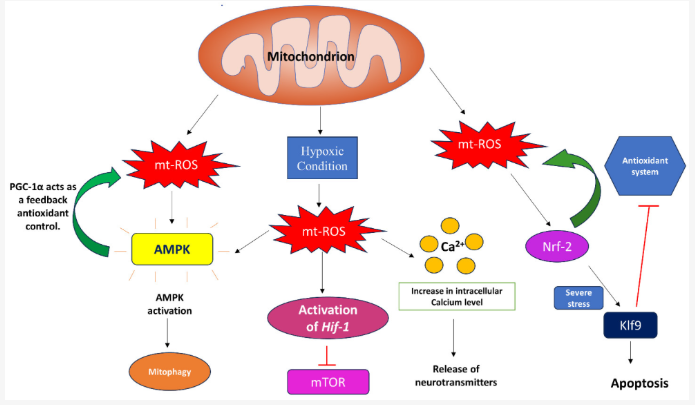
Image taken from Mukherjee et al., 2024 - mt-ROS is crucial in many signaling pathways. Here, in the diagram, we have shown how, under hypoxic conditions and normal physiological conditions, mt-ROS aids in regulation of transcription factors, release of neurotransmitters, apoptosis, mitophagy, and antioxidant system.
The role of mitochondrial oxidative stress in mitochondrial dysfunction
Mitochondrial dysfunction refers to impaired mitochondrial performance that disrupts cellular energy production, signalling, and metabolic regulation. Although mitochondrial dysfunction can arise through numerous mechanisms, excessive mitochondrial oxidative stress is considered one of the major contributing factors.
Elevated mitochondrial ROS levels may contribute to:
Damage to mitochondrial DNA
Reduced ATP production
Altered mitochondrial membrane potential
Impaired cellular signalling
Increased inflammatory signalling
Reduced cellular resilience
Mitochondrial dysfunction has been observed across a wide range of conditions associated with ageing, including cardiovascular disease, neurodegenerative disorders, metabolic dysfunction, and impaired physical performance.² Because mitochondrial dysfunction and oxidative stress often influence one another, researchers have increasingly explored mitochondria-targeted antioxidants as a strategy to help maintain mitochondrial health.
How does the body naturally defend against mitochondrial oxidative stress?
Cells possess sophisticated antioxidant defence systems that continuously regulate ROS levels. One of the most important protective pathways is the Nuclear Factor Erythroid 2-Related Factor 2 (Nrf2) pathway.⁴ When oxidative stress increases, Nrf2 activates the expression of genes involved in antioxidant and cellular defence mechanisms, leading to increased production of enzymes such as:
Superoxide dismutase (SOD)
Catalase
Glutathione peroxidase
These endogenous systems play a critical role in maintaining mitochondrial redox balance and cellular resilience.⁴⁻⁶ Rather than eliminating ROS entirely, healthy mitochondrial function depends on maintaining an appropriate balance between ROS production and antioxidant protection.
Why have conventional antioxidants shown limited clinical success?
Conventional antioxidants such as vitamin C, vitamin E, and standard CoQ10 can reduce oxidative stress throughout the body. However, many antioxidant intervention studies have produced inconsistent clinical results despite promising laboratory findings. One proposed explanation is that antioxidant activity alone may not be sufficient. The location of antioxidant activity also matters. Most cellular ROS are generated within mitochondria. If an antioxidant cannot effectively reach this location, its ability to influence mitochondrial oxidative stress may be limited. Researchers have also recognised that completely suppressing ROS is undesirable because ROS play important physiological roles in exercise adaptation, mitochondrial biogenesis, and healthy cellular signalling.⁷ ⁸ These observations have shifted scientific interest towards strategies that selectively target excessive mitochondrial oxidative stress while preserving normal cellular signalling. This concept formed the foundation for the development of mitochondria-targeted antioxidants.
How do mitochondria-targeting technologies work?
Several approaches have been developed to improve delivery of antioxidants and therapeutic compounds to mitochondria.
Lipophilic cation-based antioxidants
Mitochondria maintain a large negative membrane potential across their inner membrane. Lipophilic cation-based compounds exploit this electrical gradient by attaching bioactive molecules to positively charged carriers, most commonly triphenylphosphonium (TPP+). This enables the compounds to accumulate inside mitochondria at concentrations substantially higher than elsewhere in the cell.¹
Examples include:
MitoQ® Mitoquinol
SkQ1
MitoTEMPO
Peptide-based mitochondrial therapeutics
Some compounds use short peptides rather than electrical targeting mechanisms. These peptides selectively interact with mitochondrial membranes and may help preserve mitochondrial structure and function. The most studied example is SS-31 (elamipretide), a mitochondria-targeted tetrapeptide that binds to cardiolipin within the inner mitochondrial membrane.¹⁰ By stabilising cardiolipin, SS-31 may support electron transport chain function, mitochondrial efficiency, and mitochondrial membrane integrity.¹⁰⁻¹²
Mitochondrial support compounds
Not all compounds that support mitochondrial health directly target mitochondria. Some compounds influence mitochondrial biology indirectly through effects on antioxidant systems, mitochondrial biogenesis, or cellular stress-response pathways.
Examples include:
Coenzyme Q10 (CoQ10)
Pyrroloquinoline quinone (PQQ)
Alpha-lipoic acid
N-acetylcysteine (NAC)
Certain polyphenols such as resveratrol
Many of these compounds influence pathways such as Nrf2 and glutathione metabolism, helping support cellular antioxidant defences.⁴⁻⁶
MitoQ: the most clinically studied mitochondria-targeted antioxidant
Among currently available mitochondria-targeted antioxidants, MitoQ has accumulated the largest body of published human clinical research. MitoQ combines a ubiquinol antioxidant component with a triphenylphosphonium (TPP+) carrier, enabling mitochondrial accumulation through the mitochondrial membrane potential.
Research has investigated MitoQ across multiple areas of mitochondrial health, including:
Healthy ageing
Vascular function
Exercise performance
Metabolic health
Inflammation
Oxidative stress
One landmark study demonstrated that six weeks of supplementation improved endothelial function and reduced markers of oxidative stress in healthy older adults.¹⁶ Additional human studies have reported reductions in exercise-induced mitochondrial DNA damage and improvements in selected measures of physical performance.¹⁷˒¹⁸ Since its development in the 1990s, MitoQ remains one of the most extensively studied examples of a mitochondria-targeted antioxidant in both preclinical and clinical research.
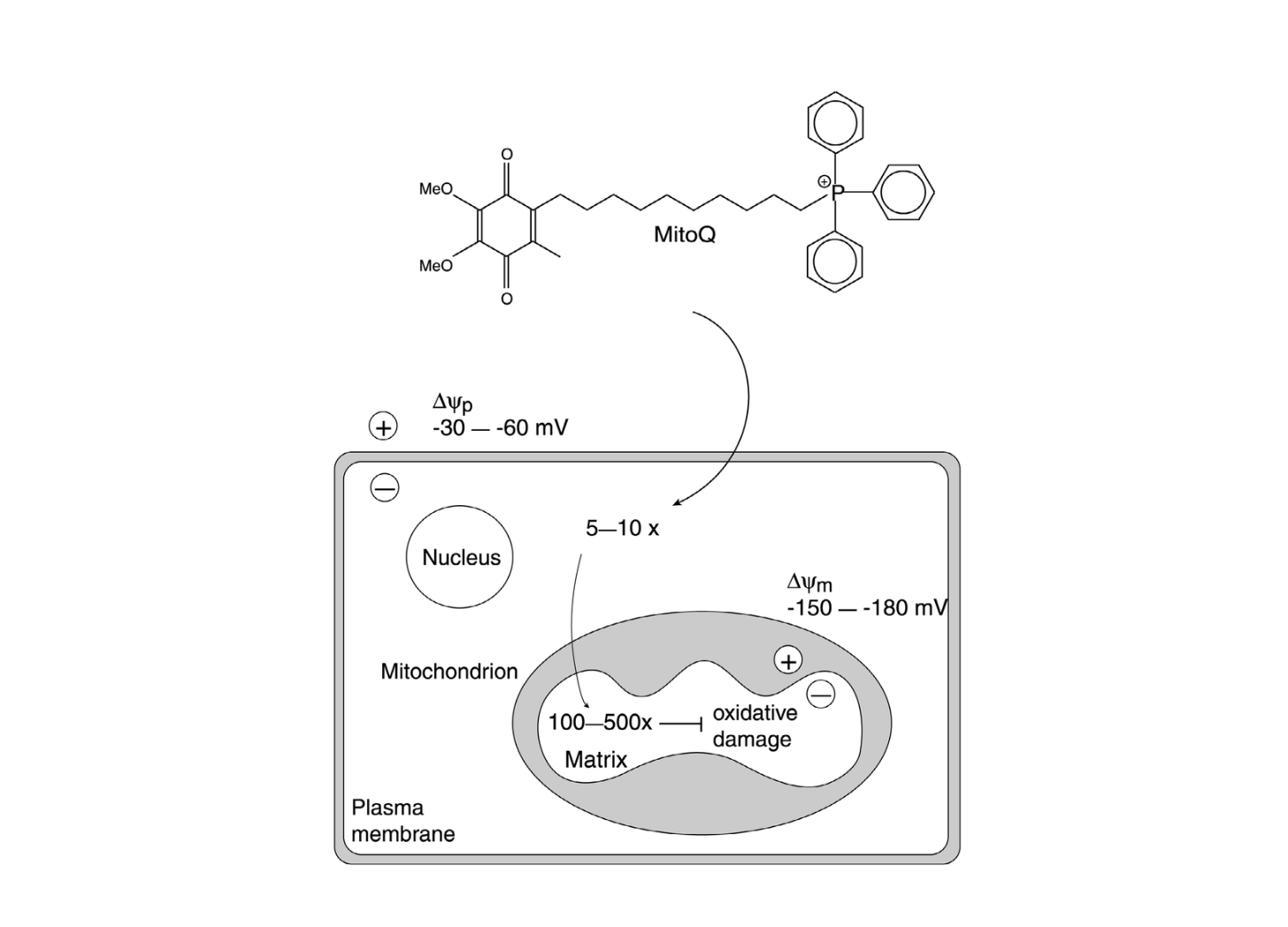
Schematic diagram illustrating the selective uptake of MitoQ into the cytoplasm driven by the plasma membrane potential (∆ψ p ) and its subsequent further accumulation by mitochondria driven by the mitochondrial membrane potential (∆ψ m ). Within mitochondria, this several-hundredfold accumulation of MitoQ relative to its concentration in the external fluid will protect the organelle from oxidative damage far more effectively than untargeted antioxidants.
How do other Mitochondrial Therapeutics Compare?
SkQ1
SkQ1 combines plastoquinone with a TPP+ mitochondrial targeting system.
Most human clinical research has focused on ophthalmology, particularly dry eye disease.¹⁹
While these studies support the broader concept of mitochondrial targeting, systemic human evidence remains limited.
MitoTEMPO
MitoTEMPO is a potent mitochondrial superoxide scavenger widely used in research models.
Although numerous preclinical studies have demonstrated promising effects, human clinical evidence remains limited.²⁰˒²¹
SS-31 (Elamipretide)
SS-31 differs mechanistically from classic antioxidant compounds.
Rather than primarily scavenging free radicals, it targets cardiolipin and supports mitochondrial membrane function.¹⁰⁻¹²
Clinical trials have investigated its effects in primary mitochondrial myopathy and other disorders characterised by mitochondrial dysfunction.²²
PQQ
PQQ is best viewed as a mitochondrial support compound rather than a mitochondria-targeted antioxidant.
Research suggests it may influence mitochondrial biogenesis, cellular resilience, and antioxidant signalling pathways.¹⁴˒¹⁵
Although early findings are encouraging, further large-scale clinical trials are needed.
What Does the Clinical Evidence Tell Us?
The field of mitochondria-targeted therapeutics continues to evolve rapidly. Although numerous compounds have demonstrated promise in laboratory and animal models, the strength of human evidence varies substantially.
Current evidence suggests:
MitoQ has the largest published body of human clinical research among commercially available mitochondria-targeted antioxidants.
SS-31 is among the most extensively studied pharmaceutical mitochondrial therapeutics.
SkQ1 has demonstrated clinical activity but remains primarily studied in ophthalmology.
MitoTEMPO remains largely a research compound.
PQQ may support mitochondrial health indirectly but is not a mitochondria-targeted antioxidant.
As mitochondrial medicine advances, future research will help determine which strategies can most effectively address mitochondrial oxidative stress and mitochondrial dysfunction in different populations.
Key Takeaways for Clinicians and Researchers
Mitochondrial oxidative stress is increasingly recognised as an important contributor to mitochondrial dysfunction, ageing, and chronic disease. Traditional antioxidants often struggle to reach mitochondria, prompting the development of targeted delivery systems capable of concentrating therapeutic compounds at the primary site of mitochondrial ROS production. Among currently available mitochondria-targeted antioxidants, MitoQ possesses the largest body of published human clinical evidence. Emerging compounds such as SS-31, SkQ1, and MitoTEMPO provide additional insights into how mitochondrial-targeting strategies may evolve in the coming years.
For clinicians, researchers, and others interested in mitochondrial medicine, mitochondria-targeted antioxidants represent a rapidly growing area of investigation that continues to reshape our understanding of oxidative stress, ageing, and mitochondrial health.
FAQs
What is a mitochondria-targeted antioxidant?
A mitochondria-targeted antioxidant (MTA) is a compound specifically designed to accumulate within mitochondria or support mitochondrial defence systems, rather than circulating generally throughout the body like conventional antioxidants. This targeted delivery allows MTAs to intercept oxidative stress closer to where it's generated — within the mitochondria themselves.
How is MitoQ different from regular CoQ10?
Both share the same antioxidant core, but conventional CoQ10 lacks a dedicated transport mechanism into mitochondria, so only a small fraction of what's absorbed ever reaches its target. MitoQ combines ubiquinol (the active form of CoQ10) with a triphenylphosphonium (TPP+) carrier, which is drawn into mitochondria by their strong negative membrane charge, allowing it to accumulate at much higher concentrations inside the organelle.
Are all mitochondria-targeted antioxidants the same?
No. They fall into distinct categories with different delivery mechanisms: lipophilic cation-targeted compounds (MitoQ, SkQ1, MitoTEMPO) use a charged TPP+ carrier; peptide-based antioxidants (SS-31/elamipretide) bind directly to cardiolipin in the inner mitochondrial membrane; and mitochondrial support compounds (like PQQ) don't accumulate in mitochondria at all, but instead influence mitochondrial signalling and biogenesis indirectly.
Which mitochondria-targeted antioxidant has the strongest clinical evidence?
MitoQ currently has the largest body of published human clinical research among mitochondria-targeted antioxidants, spanning vascular aging, exercise performance, and healthy aging populations. SkQ1, MitoTEMPO, SS-31, and PQQ remain active areas of investigation, but with more limited or more narrowly focused human clinical evidence to date.
Is PQQ a mitochondria-targeted antioxidant?
Not in the same sense as MitoQ or SS-31. PQQ doesn't selectively accumulate within mitochondria. Instead, it's better described as a mitochondrial support compound — it appears to influence mitochondrial signalling pathways, antioxidant defences, and mitochondrial biogenesis, though more human research is needed to confirm its long-term effects.
References
Murphy MP. How mitochondria produce reactive oxygen species. Biochemical Journal. 2009;417(1):1-13.
DOI: https://doi.org/10.1042/BJ20081386Balaban RS, Nemoto S, Finkel T. Mitochondria, oxidants, and aging. Cell. 2005;120(4):483-495.
DOI: https://doi.org/10.1016/j.cell.2005.02.001Brand MD. The sites and topology of mitochondrial superoxide production. Experimental Gerontology. 2010;45(7-8):466-472.
DOI: https://doi.org/10.1016/j.exger.2010.01.003Ma Q. Role of Nrf2 in oxidative stress and toxicity. Annual Review of Pharmacology and Toxicology. 2013;53:401-426.
DOI: https://doi.org/10.1146/annurev-pharmtox-011112-140320Yamamoto M, Kensler TW, Motohashi H. The KEAP1-NRF2 System: a Thiol-Based Sensor-Effector Apparatus for Maintaining Redox Homeostasis. Physiological Reviews. 2018;98(3):1169-1203.
DOI: https://doi.org/10.1152/physrev.00023.2017Tonelli C, Chio IIC, Tuveson DA. Transcriptional Regulation by Nrf2. Antioxidants & Redox Signaling. 2018;29(17):1727-1745.
DOI: https://doi.org/10.1089/ars.2017.7342Powers SK, Ji LL, Kavazis AN, Jackson MJ. Reactive oxygen species: impact on skeletal muscle. Comprehensive Physiology. 2011;1(2):941-969.
DOI: https://doi.org/10.1002/cphy.c100054Merry TL, Ristow M. Do antioxidant supplements interfere with skeletal muscle adaptation to exercise training? The Journal of Physiology. 2016;594(18):5135-5147.
DOI: https://doi.org/10.1113/JP270654Ristow M, Zarse K. How increased oxidative stress promotes longevity and metabolic health: The concept of mitochondrial hormesis (mitohormesis). Experimental Gerontology. 2010;45(6):410-418.
DOI: https://doi.org/10.1016/j.exger.2010.03.014Birk AV, Chao WM, Bracken C, Warren JD, Szeto HH. Targeting mitochondrial cardiolipin and the cytochrome c/cardiolipin complex to promote electron transport and optimise mitochondrial ATP synthesis. British Journal of Pharmacology. 2014;171(8):2017-2028.
DOI: https://doi.org/10.1111/bph.12468Szeto HH. First-in-class cardiolipin-protective compound elamipretide. Journal of Internal Medicine. 2020;288(3):331-349.
DOI: https://doi.org/10.1111/joim.13086Allen ME, Pennington ER, Perry JB, et al. The cardiolipin-binding peptide elamipretide mitigates fragmentation of cristae networks following cardiac ischemia reperfusion in rats. Communications Biology. 2020;3:389.
DOI: https://doi.org/10.1038/s42003-020-1101-3Hargreaves IP. Coenzyme Q10 as a therapy for mitochondrial disease. International Journal of Biochemistry & Cell Biology. 2014;49:105-111.
DOI: https://doi.org/10.1016/j.biocel.2014.01.020Harris CB, Chowanadisai W, Mishchuk DO, et al. Dietary pyrroloquinoline quinone alters indicators of inflammation and mitochondrial-related metabolism in human subjects. Journal of Nutritional Biochemistry. 2013;24(12):2076-2084.
DOI: https://doi.org/10.1016/j.jnutbio.2013.03.001Chowanadisai W, Bauerly KA, Tchaparian E, Wong A, Cortopassi GA, Rucker RB. Pyrroloquinoline quinone stimulates mitochondrial biogenesis through cAMP response element-binding protein phosphorylation and increased PGC-1α expression. Journal of Biological Chemistry. 2010;285(1):142-152.
DOI: https://doi.org/10.1074/jbc.M109.030130Rossman MJ, Santos-Parker JR, Steward CAC, et al. Chronic supplementation with a mitochondrial antioxidant (MitoQ) improves vascular function in healthy older adults. Hypertension. 2018;71(6):1056-1063.
DOI: 10.1161/HYPERTENSIONAHA.117.10787Williamson J, Hughes CM, Cobley JN, Davison GW. The mitochondria-targeted antioxidant MitoQ attenuates exercise-induced mitochondrial DNA damage. Redox Biology. 2020;36:101673.
DOI: https://doi.org/10.1016/j.redox.2020.101673Broome SC, Braakhuis AJ, Mitchell CJ, Merry TL. Mitochondria-targeted antioxidant supplementation improves 8 km time-trial performance in middle-aged trained male cyclists. Journal of the International Society of Sports Nutrition. 2021;18(1):58.
DOI: 10.1186/s12970-021-00454-0Petrov A, Perekhvatova N, Skulachev M, Stein L, Ousler G. SkQ1 Ophthalmic Solution for Dry Eye Treatment: Results of a Phase 2 Safety and Efficacy Clinical Study in the Environment and During Challenge in the Controlled Adverse Environment Model. Advances in Therapy. 2016;33(1):96-115.
DOI: https://doi.org/10.1007/s12325-015-0274-5Dikalova AE, Bikineyeva AT, Budzyn K, et al. Therapeutic targeting of mitochondrial superoxide in hypertension. Circulation Research. 2010;107(1):106-116.
DOI: https://doi.org/10.1161/CIRCRESAHA.109.214601Arulkumaran N, Pollen SJ, Tidswell R, et al. Selective mitochondrial antioxidant MitoTEMPO reduces renal dysfunction and systemic inflammation in experimental sepsis in rats. British Journal of Anaesthesia. 2021;127(4):577-586.
DOI: https://doi.org/10.1016/j.bja.2021.05.036Karaa A, Bertini E, Carelli V, et al. Efficacy and safety of elamipretide in individuals with primary mitochondrial myopathy: The MMPOWER-3 randomised clinical trial. Neurology. 2023;101(3):e238-e252.
DOI: https://doi.org/10.1212/WNL.0000000000207402