Mitoquinol vs Urolithin A
itoquinol and urolithin A are two widely discussed compounds in mitochondrial health research, but they target different aspects of mitochondrial dysfunction. Mitoquinol is a mitochondria-targeted antioxidant engineered to accumulate inside mitochondria, where it has been investigated for its ability to help manage mitochondrial oxidative stress¹. Urolithin A is primarily studied for its effects on mitophagy, the cellular quality-control process responsible for identifying and recycling damaged mitochondria².
As interest in mitochondrial therapeutics continues to grow, researchers and healthcare practitioners are increasingly recognising that mitochondrial dysfunction is not driven by a single biological process. Instead, age-related declines in mitochondrial health can involve excessive oxidative stress, impaired mitochondrial quality control, altered cellular signalling, and reduced energy production³˒⁴. Understanding how mitoquinol and urolithin A influence these distinct pathways can help explain why they are often viewed as complementary approaches within mitochondrial medicine and healthy aging research.
What you'll learn
How Mitoquinol and Urolithin A differ
How each compound interacts with mitochondrial biology
What clinical research has investigated for both compounds
Whether these pathways may be complementary
Why mitochondrial health matters for healthy aging
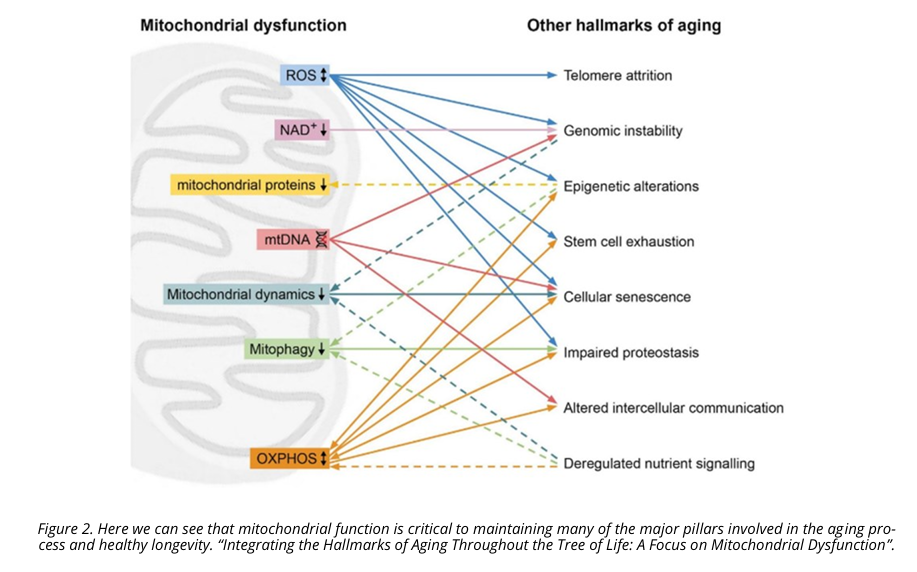
Mitochondria are often referred to as the "powerhouses" of the cell because they produce most of the energy needed to support everyday cellular processes. Beyond energy production, mitochondria also play important roles in cellular signalling, metabolism, and maintaining overall cell function. Because of these central responsibilities, mitochondrial function has become recognized as one of the major hallmarks of aging³.
As we age, mitochondria can become less efficient. This age-related decline, often referred to as mitochondrial dysfunction, may reduce the cell's ability to generate energy and maintain normal cellular processes. Researchers believe that changes in mitochondrial function contribute to many of the physiological changes associated with aging⁴, making mitochondrial health an important area of healthy aging research.
One reason mitochondria are vulnerable to age-related decline is that the process of producing energy naturally generates reactive oxygen species (ROS) as a by-product. Under normal conditions, these molecules are balanced by the body's antioxidant defence systems. However, when ROS production exceeds the body's ability to neutralise them, a state known as oxidative stress can occur. Excessive oxidative stress may damage mitochondrial proteins, lipids, and DNA, potentially impairing mitochondrial function over time⁴.
Healthy mitochondria also depend on effective mitochondrial quality control systems. Cells continuously monitor their mitochondria, repairing or removing those that become damaged or dysfunctional. One of the most important quality-control processes is mitophagy, which helps identify and recycle damaged mitochondria so they do not accumulate within cells². As mitophagy becomes less efficient with age, dysfunctional mitochondria may persist and contribute to further declines in cellular function.
For these reasons, researchers are increasingly investigating interventions that support different aspects of mitochondrial biology. Some approaches focus on helping manage mitochondrial oxidative stress, while others aim to support mitochondrial quality control and renewal. Together, these complementary processes help maintain a healthy population of functioning mitochondria throughout life and are central to ongoing healthy aging research.
Why practitioners are looking beyond conventional antioxidants
Oxidative stress has long been recognised as a contributor to aging and chronic disease. As a result, many antioxidant interventions have been investigated for their ability to support cellular health. However, researchers now recognise that oxidative stress is not evenly distributed throughout the cell. Mitochondria are a major source of reactive oxygen species (ROS), particularly during cellular energy production, making them a key area of interest in aging and mitochondrial dysfunction research⁴.
This has led to growing interest in mitochondrial therapeutics specifically designed to target mitochondrial biology rather than providing broad systemic antioxidant activity. Researchers have proposed that interventions acting directly within mitochondria may influence mitochondrial oxidative stress, mitochondrial signalling pathways, and mitochondrial function more effectively than compounds that remain widely distributed throughout the body.
As a result, several distinct therapeutic strategies have emerged. Some interventions focus on supporting mitochondrial biogenesis, others aim to enhance mitochondrial quality control through mitophagy, while mitochondria-targeted antioxidants such as mitoquinol are designed to address mitochondrial oxidative stress directly. Together, these approaches represent an evolving field of mitochondrial medicine focused on preserving mitochondrial function throughout aging.
What is Mitoquinol?
Mitoquinol is a mitochondria-targeted antioxidant developed from coq10, a naturally occurring compound involved in cellular energy production and antioxidant defence. While coq10 is found throughout the body, only a small amount is thought to reach the mitochondria, where much of the cell's energy production and oxidative stress occurs. Mitoquinol was specifically engineered to overcome this challenge by enabling greater accumulation within mitochondria⁵.
The molecule retains the same antioxidant core found in ubiquinol, the active form of coq10, but includes mitochondria-targeting technology that helps it cross cellular membranes and concentrate inside mitochondria. This targeting is driven by the strong negative charge across the inner mitochondrial membrane, which attracts the positively charged mitoquinol molecule and allows it to accumulate where mitochondrial reactive oxygen species are generated⁶.
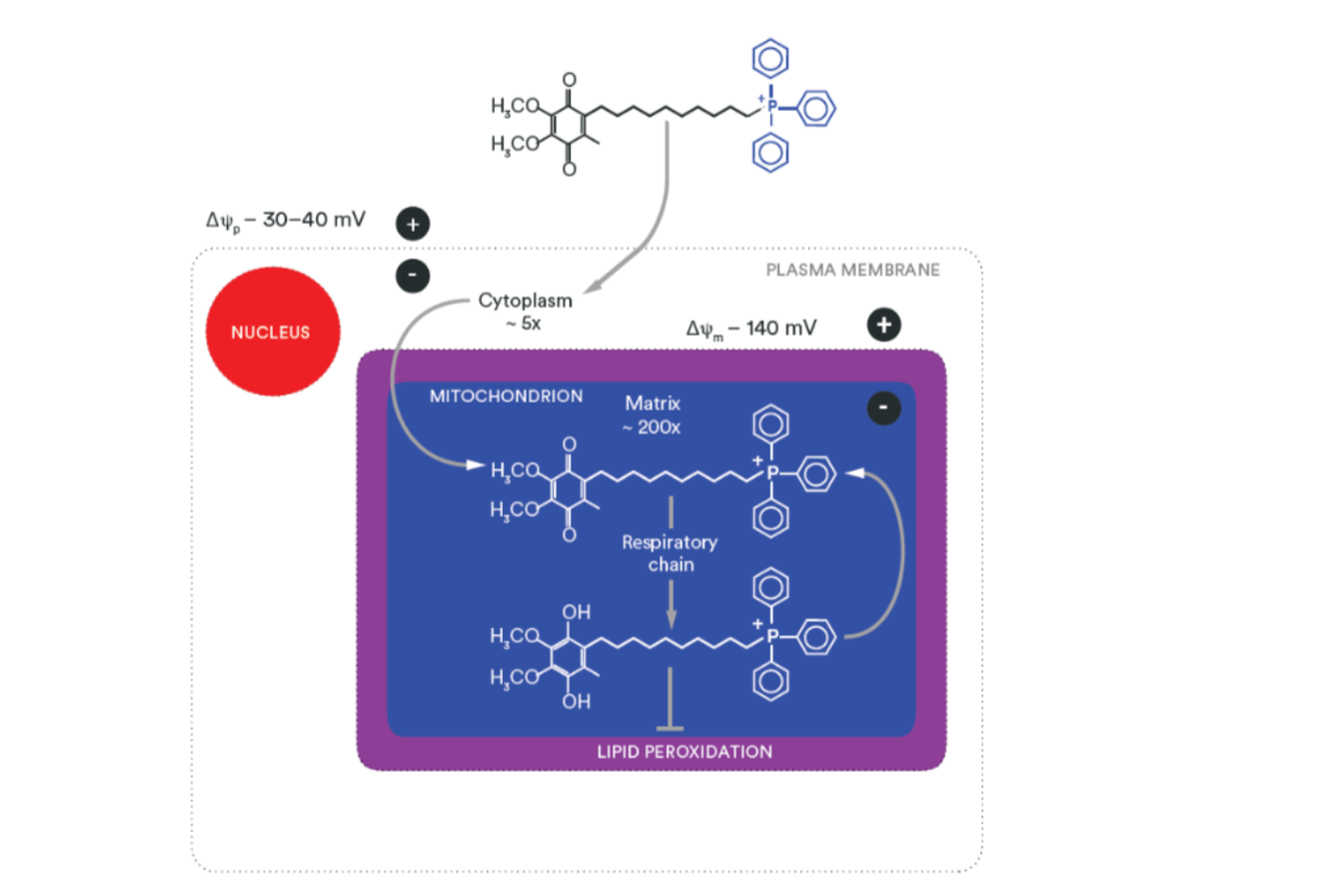
Image taken from MCRP Longevity Whitepaper. Mechanism of action: how mitoquinol targets mitochondria
Once inside the mitochondria, mitoquinol has been studied for its ability to help manage mitochondrial oxidative stress. Oxidative stress is a natural by-product of energy production, but excessive levels can damage mitochondrial proteins, lipids and DNA over time. By concentrating directly within mitochondria, mitoquinol was designed to help support antioxidant defences closer to the source of oxidative stress.
Because mitochondrial oxidative stress is considered one of the contributors to age-related mitochondrial dysfunction, mitoquinol has been investigated in both preclinical and human research related to mitochondrial function, vascular health, exercise performance and healthy aging⁷,⁸.
What is Urolithin A?
Urolithin A is a naturally occurring metabolite produced when certain gut microbes convert ellagitannins and ellagic acid — compounds found in foods such as pomegranates, walnuts, and berries. Unlike these dietary compounds, which have relatively low bioavailability, Urolithin A is more readily absorbed and can circulate throughout the body⁹.
Importantly, not everyone produces Urolithin A efficiently. Its formation depends on the composition of an individual's gut microbiome, and research suggests that only a proportion of people naturally generate meaningful amounts of Urolithin A after consuming ellagitannin-rich foods¹⁰. This variability has led researchers to investigate direct Urolithin A supplementation as a way to provide more consistent exposure.
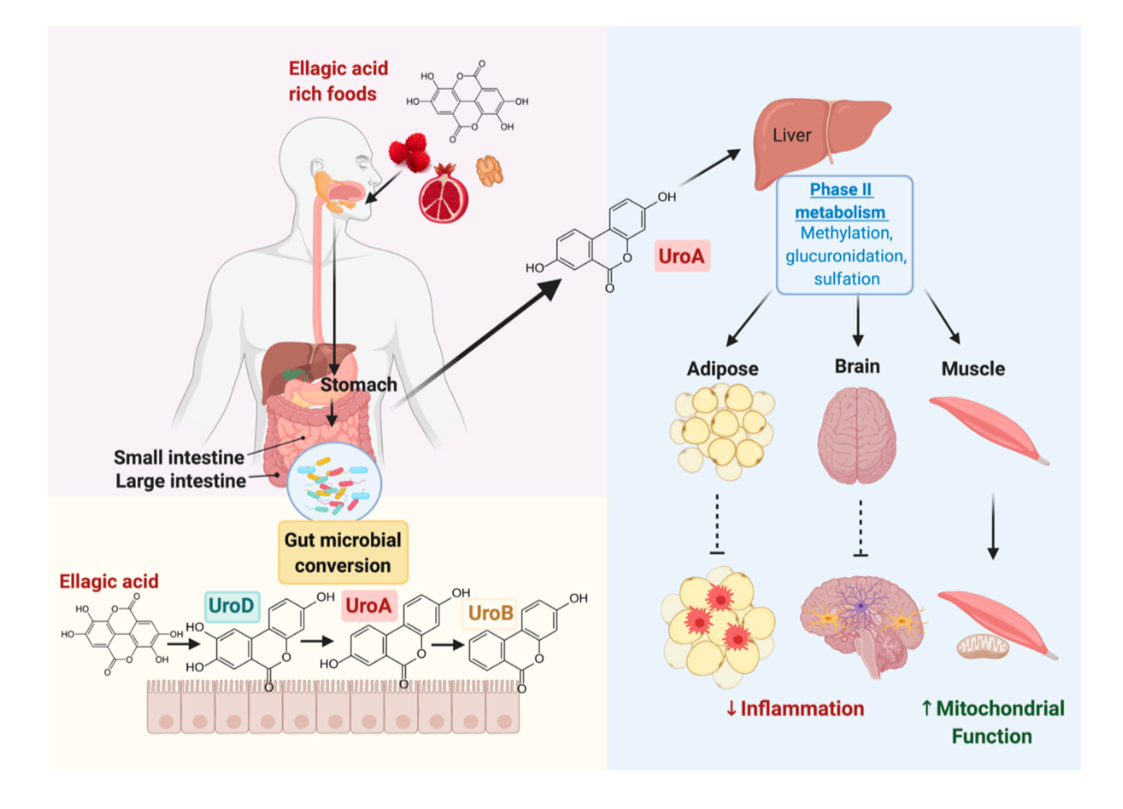
Image taken from Toney et al. Figure 1. Ellagic-acid containing foods undergo gut microbial conversion to yield various forms of urolithins (Uro). Urolithin A (UroA) enters circulation and reaches the liver, to undergo phase II metabolism, to yield conjugated forms of UroA (such as methylation, glucuronidation, and sulfation). Conjugated UroA is able to reach peripheral tissues, including the adipose, brain, and muscle tissue, to prevent inflammation and increase mitochondrial function.
Urolithin A has attracted scientific interest because of its effects on mitophagy. As we age, mitophagy can become less efficient, allowing dysfunctional mitochondria to accumulate within cells. Researchers have investigated Urolithin A for its ability to influence molecular pathways involved in mitochondrial quality control, including the PINK1/parkin pathway, which helps coordinate the removal of damaged mitochondria².
By supporting the recycling of older or dysfunctional mitochondria, Urolithin A is often described as promoting mitochondrial renewal rather than directly targeting mitochondrial oxidative stress. This distinction is important because mitochondrial health depends not only on protecting mitochondria from damage, but also on maintaining a healthy population of functioning mitochondria through ongoing quality-control processes. Urolithin A research has therefore focused primarily on mitophagy, mitochondrial quality control, muscle health, and healthy aging¹¹,¹².
Mitoquinol and Urolithin A: different approaches to mitochondrial health
Although both compounds are discussed in the context of mitochondrial health, they influence distinct biological processes. Mitoquinol is primarily associated with mitochondrial oxidative stress, whereas Urolithin A is commonly studied in relation to mitochondrial turnover and renewal.
Mitoquinol was developed to target mitochondria directly and help manage mitochondrial oxidative stress. Oxidative stress is generated as a by-product of normal energy production and can contribute to mitochondrial damage when antioxidant defences become overwhelmed. Our longevity whitepaper explains that mitoquinol accumulates within mitochondria and can help protect against oxidative damage while supporting antioxidant defence systems.
Urolithin A is primarily studied for its influence on mitophagy, which is considered an important component of mitochondrial quality control and healthy aging²,³.
What does the clinical research show?
Clinical research on mitoquinol
As a mitochondria-targeted antioxidant, mitoquinol has been investigated across a broad range of human clinical studies examining mitochondrial function, vascular health, exercise performance, and healthy aging. Unlike conventional antioxidants that remain widely distributed throughout the body, mitoquinol was specifically designed to accumulate within mitochondria, allowing researchers to study whether targeting mitochondrial oxidative stress can influence age-related changes in cellular and physiological function.
Mitoquinol and vascular aging
One of the most important distinctions between mitoquinol and urolithin A is the breadth of vascular research available for mitoquinol. Aging is associated with progressive endothelial dysfunction, reduced nitric oxide availability, and increased mitochondrial oxidative stress within vascular tissues. These changes are increasingly recognised as contributors to vascular aging and age-related declines in cardiovascular function.
Human clinical studies have investigated mitoquinol in relation to endothelial function, vascular responsiveness, blood pressure and cardiovascular health markers⁷˒¹³. This vascular focus represents one of the most advanced areas of mitoquinol research and highlights the growing interest in mitochondrial dysfunction as a therapeutic target in cardiovascular aging.
Mitoquinol and exercise performance
Mitochondria play a central role in supplying energy during physical activity, making exercise another active area of mitoquinol research. Clinical studies have investigated mitoquinol in athletes, recreationally active adults, and older populations to determine whether supporting mitochondrial health may influence exercise capacity and recovery.
Research has reported improvements in outcomes such as exercise tolerance, walking performance, and physical function in certain populations, particularly among people with peripheral artery disease¹⁵. Investigators have also explored whether reducing mitochondrial oxidative stress may help support normal physiological responses to exercise without interfering with beneficial training adaptations.
Mitoquinol and oxidative stress markers
Because mitoquinol was specifically developed to target mitochondrial oxidative stress, many clinical studies have measured biomarkers associated with oxidative damage and antioxidant status. Oxidative stress occurs when reactive oxygen species are produced faster than the body's antioxidant defence systems can neutralize them.
Human studies have reported reductions in markers of oxidative stress following mitoquinol supplementation⁷, supporting its proposed mechanism of action as a mitochondria-targeted antioxidant. Researchers continue to investigate how these changes may relate to broader measures of cellular and tissue function.
Mitoquinol and mitochondrial function
Mitoquinol has also been studied in relation to mitochondrial function itself. Since mitochondria are responsible for producing most of the cell's energy, maintaining healthy mitochondrial function is considered important for healthy aging³. Clinical and preclinical research has explored how mitoquinol influences mitochondrial bioenergetics, mitochondrial oxidative stress, and cellular energy production. While different studies have used varying methodologies and participant populations, the overall body of research reflects growing interest in mitochondria-targeted interventions that address mitochondrial dysfunction directly.
Healthy aging populations
Many mitoquinol studies have been conducted in middle-aged and older adults, populations in which mitochondrial function, antioxidant defences, and vascular health often decline with age. Researchers have investigated whether targeting mitochondrial oxidative stress can help support healthy physiological function during aging, particularly in relation to vascular health, physical function, and mitochondrial biology.
Ongoing clinical trials continue to examine mitoquinol in healthy aging populations, including studies focused on frailty, mobility, cognitive function, and cardiovascular health¹⁶. Together, these findings have helped establish mitoquinol as one of the most extensively researched mitochondria-targeted antioxidants currently available.
This growing clinical evidence contrasts with urolithin a's research focus on mitophagy and mitochondrial quality control, illustrating how the two compounds are being studied for different, though potentially complementary, aspects of mitochondrial health and healthy aging.
Clinical research on Urolithin A
Human research on urolithin A has largely focused on muscle health and healthy aging populations. Several studies have investigated doses ranging from 500 mg to 1,000 mg daily, particularly in sedentary middle-aged and older adults¹¹,¹². The first-in-human safety trial established that urolithin A supplementation was well tolerated and produced a molecular signature consistent with improved mitochondrial and cellular health¹⁷.
Some studies have reported improvements in measures such as muscle endurance, leg strength, walking performance and mitochondrial biomarkers associated with cellular energy metabolism¹¹,¹². Researchers have also reported changes in proteins involved in mitophagy and mitochondrial function¹¹. However, findings have not been universally consistent across all outcomes, with some studies showing improvements in specific measures but not others.
Beyond muscle health, emerging research has explored potential effects on immune function, cardiovascular biomarkers and cognitive health. While these areas remain active fields of investigation, larger clinical trials are ongoing and additional evidence is needed to better understand the significance of these findings.
Emerging mitochondrial therapeutics target different pathways
Research into mitochondrial dysfunction has expanded rapidly over the past decade, leading to the emergence of several categories of mitochondrial therapeutics. These interventions aim to support different aspects of mitochondrial biology rather than addressing a single pathway.
Current areas of investigation include:
Mitochondria-targeted antioxidants that help manage mitochondrial oxidative stress
Mitophagy-supporting compounds that promote mitochondrial quality control
Interventions that influence mitochondrial biogenesis and cellular energetics
Approaches designed to support mitochondrial signalling and metabolic flexibility
Within this growing field, mitoquinol and urolithin A represent two distinct examples of how researchers are attempting to address different contributors to mitochondrial dysfunction. Their differing mechanisms highlight the complexity of mitochondrial biology and the need for multiple approaches to support healthy mitochondrial function throughout aging.
Key takeaway
Mitoquinol and urolithin A are often discussed together because both are associated with mitochondrial health, yet they target different aspects of mitochondrial dysfunction. Mitoquinol is a mitochondria-targeted antioxidant studied primarily for its effects on mitochondrial oxidative stress, vascular aging, mitochondrial function and healthy aging. Urolithin A is primarily investigated for its ability to support mitophagy and mitochondrial quality control.
Rather than representing competing approaches, these compounds illustrate two important therapeutic strategies emerging from mitochondrial medicine: protecting mitochondria from oxidative damage and supporting the renewal of damaged mitochondria. As research into mitochondrial dysfunction continues to evolve, both pathways are expected to remain important areas of investigation for healthy aging and age-related physiological decline.
FAQ
What is the difference between mitoquinol and urolithin A?
Mitoquinol and Urolithin A support mitochondrial health through different biological mechanisms. Mitoquinol is a mitochondria-targeted antioxidant that accumulates within mitochondria and helps manage mitochondrial oxidative stress¹,⁵. Urolithin A is primarily studied for its ability to support mitophagy².
Is mitoquinol the same as urolithin A?
No. They are distinct compounds with different origins, structures and biological targets. Mitoquinol is a modified form of ubiquinol designed to accumulate within mitochondria, while urolithin A is a metabolite produced from the metabolism of ellagitannins by certain gut microbes.
Which compound helps manage mitochondrial oxidative stress?
Mitoquinol was specifically designed to help address mitochondrial oxidative stress. It accumulates within mitochondria where reactive oxygen species are generated during energy production and can help support antioxidant defence systems⁶.
Does mitoquinol reach mitochondria directly?
Yes. Our longevity whitepaper explains that mitoquinol was engineered using mitochondria-targeting technology that enables it to cross biological membranes and accumulate within mitochondria. This is also documented in the pharmacological literature⁵,⁶. [Internal source — link to your longevity whitepaper]
Does urolithin A accumulate within mitochondria?
Current research generally focuses on urolithin a's effects on cellular pathways involved in mitophagy rather than direct mitochondrial accumulation².
Why is mitochondrial oxidative stress important?
Our longevity whitepaper identifies oxidative stress as a major contributor to mitochondrial dysfunction and age-related declines in cellular function. When reactive oxygen species accumulate faster than antioxidant defences can neutralise them, mitochondrial proteins, lipids and DNA may become damaged.
References
1. Smith RA, murphy MP. Animal and human studies with the mitochondria-targeted antioxidant mitoq. Ann N Y acad sci. 2010;1201:96–103. Https://pubmed.Ncbi.Nlm.Nih.Gov/20649545/
2. Ryu D, mouchiroud L, andreux PA, et al. Urolithin A induces mitophagy and prolongs lifespan in C. Elegans and increases muscle function in rodents. Nat med. 2016;22:879–888. Https://www.Nature.Com/articles/nm.4132
3. López-otín C, blasco MA, partridge L, serrano M, kroemer G. Hallmarks of aging: an expanding universe. Cell. 2023;186(2):243–278. Https://pubmed.Ncbi.Nlm.Nih.Gov/36599349/
4. Mitochondria in oxidative stress, inflammation and aging: from mechanisms to therapeutic advances. Signal transduct target ther. 2025. Https://www.Nature.Com/articles/s41392-025-02253-4
5. Asin-cayuela J, manas AR, james AM, smith RA, murphy MP. Fine-tuning the hydrophobicity of a mitochondria-targeted antioxidant. FEBS lett. 2004;571(1–3):9–16. Https://febs.Onlinelibrary.Wiley.Com/doi/10.1016/j.Febslet.2004.06.045
6. James AM, cochemé HM, smith RA, murphy MP. Interactions of mitochondria-targeted antioxidants with phospholipid bilayers and ubiquinone oxidoreductases. J biol chem. 2005. Background mechanism also reviewed in murphy MP, smith RA, "understanding and preventing mitochondrial oxidative damage." Https://pubmed.Ncbi.Nlm.Nih.Gov/17369262/ and https://ncbi.Nlm.Nih.Gov/pmc/articles/PMC5095902
7. Rossman MJ, santos-parker JR, steward CAC, et al. Chronic supplementation with a mitochondrial antioxidant (mitoq) improves vascular function in healthy older adults. Hypertension. 2018;71(6):1056–1063. Https://www.Ahajournals.Org/doi/10.1161/hypertensionaha.117.10787
8. Rossman MJ, et al. Mitochondrial-targeted antioxidant supplementation for improving age-related vascular dysfunction in humans: A study protocol (NCT04851288). Front physiol. 2022. Https://www.Frontiersin.Org/journals/physiology/articles/10.3389/fphys.2022.980783/full
9. Tomás-barberán FA, garcía-villalba R, gonzález-sarrías A, selma MV, espín JC. Urolithins, the rescue of "old" metabolites to understand a "new" concept: metabotypes as a nexus among phenolic metabolism, microbiota dysbiosis, and host health status. Mol nutr food res. 2017. Https://onlinelibrary.Wiley.Com/doi/abs/10.1002/mnfr.201500901
10. Selma MV, gonzález-sarrías A, salas-salvadó J, et al. The gut microbiota metabolism of pomegranate or walnut ellagitannins yields two urolithin-metabotypes that correlate with cardiometabolic risk biomarkers. Clin nutr. 2018;37(3):897–905. Https://www.Sciencedirect.Com/science/article/abs/pii/S0261561417301036
11. Singh A, d'amico D, andreux PA, et al. Urolithin A improves muscle strength, exercise performance, and biomarkers of mitochondrial health in a randomized trial in middle-aged adults. Cell rep med. 2022;3(5):100633. Https://pubmed.Ncbi.Nlm.Nih.Gov/35584623/
12. Liu S, d'amico D, shankland E, et al. Effect of urolithin A supplementation on muscle endurance and mitochondrial health in older adults: A randomized clinical trial. JAMA netw open. 2022;5(1):e2144279. Https://pubmed.Ncbi.Nlm.Nih.Gov/34995366/
13. Park SY, pekas EJ, headid RJ, et al. Acute mitochondrial antioxidant intake improves endothelial function, antioxidant enzyme activity, and exercise tolerance in patients with peripheral artery disease. Am J physiol heart circ physiol. 2020;319(2):h456–h467. Https://journals.Physiology.Org/doi/full/10.1152/ajpheart.00235.2020
14. Mitoq for peripheral arterial disease — clinical trial listing summarizing the mitoq PAD research program. Https://clinicaltrials.Gov/study/NCT04851288 (parent program); pad-specific trial: https://www.Withpower.Com/trial/mitoq-for-peripheral-arterial-disease-67245
15. Effects of mitoquinone (mitoq) supplementation on aerobic exercise performance and oxidative damage: A systematic review and meta-analysis. Sports med open. 2024;10:79. Https://link.Springer.Com/article/10.1186/s40798-024-00741-5
16. The mito-frail trial: effects of mitoq on vasodilation, mobility and cognitive performance in frail older adults (NCT06027554). Https://clinicaltrials.Gov/study/NCT06027554
17. Andreux PA, blanco-bose W, ryu D, et al. The mitophagy activator urolithin A is safe and induces a molecular signature of improved mitochondrial and cellular health in humans. Nat metab. 2019;1:595–603. Https://pubmed.Ncbi.Nlm.Nih.Gov/32694802/