

Supplements for Mitochondrial Health
What the Evidence Shows
Mitochondrial supplements are compounds intended to support how mitochondria produce energy, control oxidants and renew themselves. Some supply substrates or cofactors for the respiratory chain, some act on redox balance, and others target quality-control processes such as mitophagy or NAD⁺-dependent signalling. The central problem is matching the compound to the bottleneck: a supplement can only help where its target is genuinely limiting. Human trials show that several compounds reach their targets, including NAD⁺ precursors raising the muscle NAD⁺ metabolome and mitoquinol lowering mitochondrial hydrogen peroxide, but target engagement has translated into functional benefit only in selected populations¹⁻⁴. Untargeted, high-dose antioxidants can also blunt beneficial adaptation to exercise⁵,⁶. Most trials are small, short and often industry-funded, so supplements are best positioned as targeted adjuncts to lifestyle measures rather than substitutes for them.
Why Do Supplements for Mitochondrial Health Matter?
Few areas of practice generate more patient questions than mitochondrial supplements. Patients arrive with NAD⁺ precursors, urolithin A, CoQ10 and methylene blue already in their cupboards, often taken together and usually chosen from marketing that promises to "boost energy" or "recharge cells". The practitioner's task is rarely to introduce a supplement. It is to decide which of these compounds has a plausible target in this person, which has human evidence, and which may be redundant or counterproductive.
The question matters because mitochondrial impairment is a recurring feature of conditions seen daily in clinic, from cardiometabolic disease and age-related muscle loss to post-viral fatigue. Yet the evidence base is uneven. Primary mitochondrial disease, where the need for intervention is greatest, still has no proven supplement therapy; consensus guidance from the Mitochondrial Medicine Society rests largely on expert opinion, and a Cochrane review found no clear evidence supporting any intervention⁷,⁸. In the wider population, the gap between mechanistic promise and clinical outcome is wider still.
A useful way through is to stop asking "which supplement is best for mitochondria?" and ask instead "which part of mitochondrial function is failing, and what would correct it?"
Mitochondria convert fuel into ATP through a chain of enzymes that depends on a steady supply of substrates, cofactors and intact membranes. Every step also leaks a small fraction of electrons to oxygen, forming superoxide and hydrogen peroxide. At low levels these reactive species act as signals that drive adaptation; at high or sustained levels they damage proteins, lipids and mitochondrial DNA. Meanwhile, damaged mitochondria must be removed and replaced, a process that slows with age, inactivity and chronic disease.
A mitochondrial problem can therefore arise at several distinct points: too little substrate or cofactor, too much oxidant at the wrong site, an exhausted NAD⁺ pool, or a backlog of damaged organelles. Each has a different solution, and correcting one will not repair another.
The body solves these problems with its own systems: dietary intake supplies cofactors, endogenous antioxidant enzymes such as superoxide dismutase and glutathione peroxidase control redox tone, NAD⁺ is recycled through salvage pathways, and mitophagy and biogenesis renew the network. Supplementation is a way of reinforcing one of these systems from outside. For that to work, three conditions must hold. The compound must reach the relevant compartment, often the inner mitochondrial membrane or matrix. The system it supports must be genuinely limiting. And reinforcing it must not suppress a signal the body needs.
A patient whose mitochondria cope with exertion, illness or recovery without disproportionate fatigue, oxidative damage or inflammation has adapted well. The most reliable driver of this state remains exercise, which raises mitochondrial content, antioxidant enzyme expression and quality control together. Supplements earn their place when they address a specific limitation that lifestyle measures alone have not corrected.
How Do Mitochondrial Supplements Work?
Mitochondrial supplements are best grouped by the problem they solve rather than by ingredient. Four targets account for most compounds in current use (Figure 1).
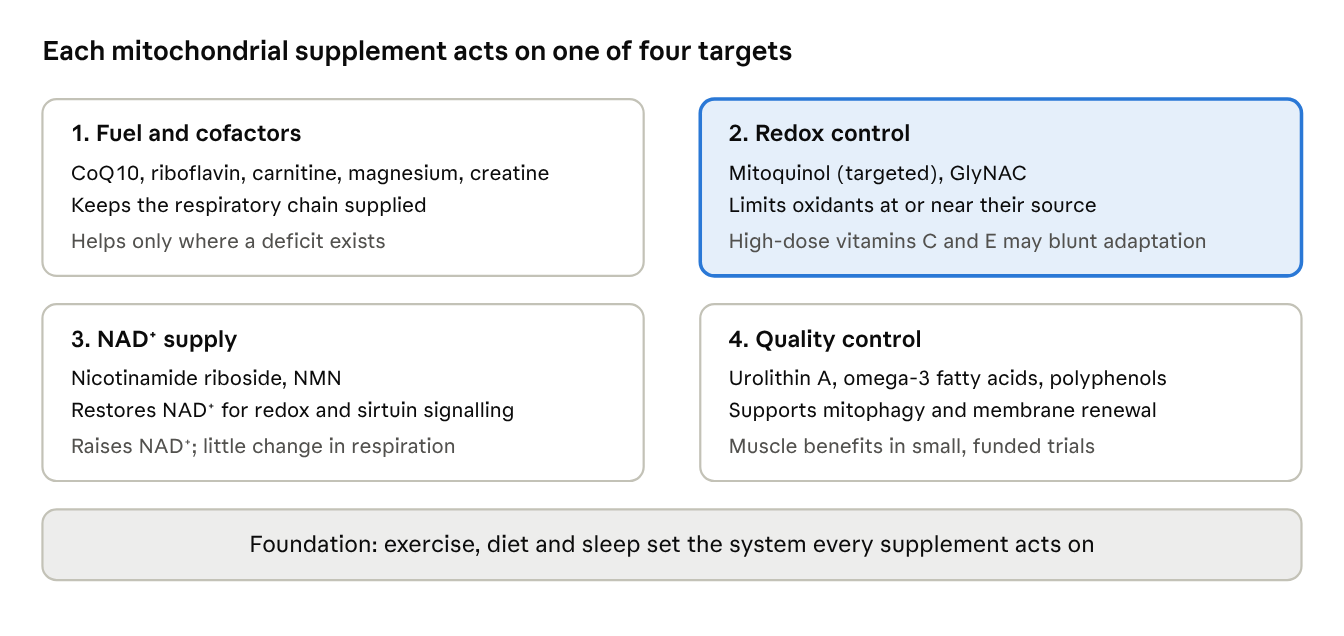
Figure 1. Mitochondrial supplements grouped by the problem they address. Mitoquinol is highlighted as the only compound in this article designed to act inside the inner mitochondrial membrane.
Fuel and Co-factors For Mitochondria
The respiratory chain needs electron carriers and enzyme cofactors to run. Riboflavin supplies the flavin groups of complexes I and II, thiamine supports pyruvate entry into the TCA cycle, carnitine shuttles long-chain fatty acids into the matrix, and magnesium is required for ATP to be biologically active. Coenzyme Q10 carries electrons from complexes I and II to complex III. These compounds correct a limitation only when one exists. In primary mitochondrial disease, specialists commonly use CoQ10, riboflavin and carnitine on this rationale, although trial evidence remains limited⁷,⁸. Outside deficiency states, adding more cofactor to a well-supplied chain is unlikely to increase its output.
Creatine sits slightly apart. It does not feed the chain directly; it stores high-energy phosphate as phosphocreatine and shuttles it from mitochondria to sites of ATP use. Creatine therefore buffers energy demand, particularly in muscle and brain, and has the largest and most consistent human evidence base of any compound in this article, chiefly for strength and lean mass when combined with resistance training⁹,¹⁰.
Redox Control: Managing Oxidants at Their Source
Most mitochondrial superoxide is generated at complexes I and III, inside the inner membrane. Conventional antioxidants such as vitamins C and E distribute throughout the body and do not concentrate at this site. At high doses they can also quench the redox signals that trigger adaptation: in trained adults, high-dose vitamin C and E supplementation blunted exercise-induced improvements in insulin sensitivity and mitochondrial adaptation⁵,⁶.
Two strategies attempt to avoid this problem. The first restores endogenous capacity: GlyNAC supplies glycine and cysteine, the rate-limiting precursors of glutathione, which is depleted in many older adults¹¹. The second delivers an antioxidant directly to the inner membrane. Mitoquinol attaches the active ubiquinol moiety of CoQ10 to a lipophilic triphenylphosphonium (TPP⁺) cation, which the negative membrane potential draws into mitochondria, where it accumulates several hundred-fold¹²,¹³. It is then recycled to its active form by complex II, allowing sustained activity at low oral doses¹².
NAD⁺ Supply: Sustaining Redox Cofactors and Signalling
NAD⁺ accepts electrons from the TCA cycle and is also consumed by sirtuins, PARP enzymes and CD38, which link energy status to DNA repair and inflammation. Tissue NAD⁺ falls in several ageing and disease models, which prompted the use of precursors such as nicotinamide riboside (NR) and nicotinamide mononucleotide (NMN). In humans, these precursors reliably raise NAD⁺ metabolites in blood and muscle¹,¹⁴. Whether that raises mitochondrial respiration is a separate question, and so far the human answer is largely no¹.
Quality Control: Clearing and Renewing Mitochondria
Damaged mitochondria are removed by mitophagy and replaced through biogenesis. Urolithin A, a gut microbial metabolite of ellagitannins found in pomegranate, berries and walnuts, induces mitophagy in cell and animal models, and oral supplementation increases mitochondrial gene expression in human muscle¹⁵. Because only some people produce urolithin A from dietary precursors, supplementation delivers the compound regardless of microbiome composition. Omega-3 fatty acids act on a related level: they incorporate into mitochondrial membranes and, in human muscle, have increased ADP sensitivity of respiration without increasing mitochondrial content¹⁶. Polyphenols such as resveratrol activate sirtuin and AMPK signalling, but human effects on mitochondrial function have been inconsistent¹⁷,¹⁸.
Real-World Example: Supplementing the Ageing Muscle
Older adults are the population in which mitochondrial supplements have been tested most often, and they show clearly how target engagement and functional benefit can diverge.
The starting challenge is familiar: with age, skeletal muscle accumulates mitochondria with lower respiratory capacity, higher oxidant emission and slower turnover, contributing to fatigue and reduced endurance. Each major supplement class has been tested against a different part of this picture.
Quality control. In 66 adults aged 65 to 90, 1,000 mg/day of urolithin A for four months improved hand and leg muscle endurance and lowered plasma acylcarnitines and ceramides, but did not improve the primary outcome, six-minute walk distance². In middle-aged adults, 500 to 1,000 mg/day improved leg muscle strength¹⁹. Both trials were funded by the manufacturer.
NAD⁺ supply. In 12 aged men, 1 g/day of NR for 21 days raised the muscle NAD⁺ metabolome and lowered circulating inflammatory cytokines, but left mitochondrial bioenergetics unchanged¹.
Glutathione restoration. In 24 older adults, GlyNAC for 16 weeks corrected glutathione deficiency, lowered oxidative stress and improved mitochondrial fatty-acid oxidation, gait speed and strength¹¹. The trial was small and from a single research group.
Targeted redox control. In 20 healthy adults aged 60 to 79, 20 mg/day of mitoquinol for six weeks improved vascular endothelial function by 42%, an outcome linked to reduced mitochondrial oxidant suppression of nitric oxide⁴.
The sequence is instructive. Each compound reached its target, yet benefits appeared in different tissues and outcomes. None replaced exercise, which remains the only intervention that improves mitochondrial content, function and whole-body capacity together. The example also marks the limit of adaptive supplementation: where a compound blunts training signals, as high-dose general antioxidants can, it becomes counterproductive⁵,⁶.
When Does Mitochondrial Supplementation Fail?
Supplementation fails in predictable ways. The most common is a mismatch between compound and bottleneck: cofactors given to a chain that is not short of them, or NAD⁺ precursors given where NAD⁺ is not limiting. A second is suppression of adaptive signalling, when broad antioxidants remove the oxidant pulse that exercise and other stressors use to trigger mitochondrial renewal⁵,⁶. A third is overinterpretation of biomarkers: a rise in NAD⁺, a fall in plasma oxidative stress markers or a change in gene expression shows that a compound has acted, not that the patient will feel or function better¹,³.
Some failures carry risk. Methylene blue acts as an alternative electron carrier and has a hormetic, U-shaped dose response; at higher doses it becomes pro-oxidant, and it is a potent monoamine oxidase inhibitor that can precipitate serotonin syndrome with serotonergic medicines²⁰. Stacking several products with overlapping targets adds cost and interaction risk without additive benefit.
Conditions in Which Mitochondrial Supplements Have Been Investigated
| Dysregulated process | Conditions investigated | Why they may be connected |
|---|---|---|
| Respiratory-chain defects and cofactor demand | Primary mitochondrial disease | Genetic defects limit specific complexes; cofactor "cocktails" are used on rationale, but randomised evidence of benefit is lacking7,8 |
| Impaired energy supply in cardiac muscle | Heart failure | CoQ10 300 mg/day for two years reduced major adverse cardiovascular events in Q-SYMBIO; a single trial, not yet replicated at scale21 |
| Mitochondrial oxidant suppression of nitric oxide | Vascular ageing, chronic kidney disease | Mitoquinol improved endothelial function in older adults and in chronic kidney disease, in small trials4,22 |
| NAD⁺-linked insulin signalling | Prediabetes and insulin resistance | NMN improved muscle insulin sensitivity in postmenopausal women with prediabetes, without changes in blood glucose or liver fat23 |
| Slowed mitochondrial turnover and glutathione loss | Age-related muscle loss and frailty | Urolithin A and GlyNAC improved selected muscle outcomes in small trials; primary endpoints were not always met2,11 |
| Mitochondrial dysfunction in neurons | Parkinson's disease | Mitoquinol did not slow progression in early Parkinson's disease, possibly because treatment began after substantial neuronal loss24 |
Practitioner Lens: How to Choose a Mitochondrial Supplement
Biomarkers and Functional Readouts
Few clinic-accessible tests measure mitochondrial function directly, so supplement decisions usually rest on a combination of clinical picture, indirect markers and functional change. The Diagnostics guide covers testing in detail; the measures below are those most relevant to judging supplement response.
| Measure | What it may indicate | Key limitation |
|---|---|---|
| Organic acids, plasma lactate:pyruvate, acylcarnitines | Cofactor insufficiency, impaired fatty-acid or pyruvate oxidation | Influenced by diet, fasting state and exercise; not tissue-specific |
| Oxidative stress markers (F2-isoprostanes, oxidised LDL, 8-OHdG) | Systemic oxidative burden | Not specific to mitochondria; may not move even when mitochondrial oxidants fall3 |
| Blood NAD⁺ metabolome or red-cell glutathione | Target engagement for NAD⁺ precursors or GlyNAC | Shows the compound acted; does not predict functional benefit1 |
| Functional tests (six-minute walk, sit-to-stand, grip strength, symptom and fatigue scales) | Whole-person capacity under demand | Affected by motivation, training and comorbidity; need a baseline and repeat |
Mitochondrial Supplements at a Glance
| Supplement | Primary mitochondrial target | Strongest human evidence | Evidence and cautions |
|---|---|---|---|
| Creatine | Phosphocreatine energy buffer | Strength and lean mass with resistance training, including older adults9,10 | Large, consistent evidence base; benefit depends on training |
| CoQ10 | Electron carrier between complexes I–III and lipid-soluble antioxidant | Heavily researched as an antioxidant; in heart failure, Q-SYMBIO reported fewer major cardiovascular events21 | Large, fat-soluble molecule with poor uptake into mitochondria, so little reaches the site where most oxidants are made. See MitoQ vs CoQ10 |
| Mitoquinol (MitoQ) | Mitochondria-targeted antioxidant at the inner membrane | Vascular function in older adults and chronic kidney disease4,22 | Small trials, several MitoQ-funded; null in early Parkinson's disease24 |
| NR / NMN | NAD⁺ supply and sirtuin signalling | Raised NAD⁺ metabolome; muscle insulin sensitivity in one NMN trial1,23 | Little effect on mitochondrial respiration in humans to date |
| Urolithin A | Mitophagy induction | Muscle endurance and strength in older and middle-aged adults2,19 | Manufacturer-funded; primary walking outcome not met |
| GlyNAC | Glutathione restoration | Oxidative stress, fatty-acid oxidation and gait speed in older adults11 | One small trial; replication needed |
| Omega-3 fatty acids | Mitochondrial membrane composition | Improved ADP sensitivity of muscle respiration16 | Mitochondrial endpoints are secondary to cardiovascular evidence |
| Methylene blue | Alternative electron carrier | Mostly preclinical and acute studies | Narrow dose window; serious interaction with serotonergic drugs20 |
Supporting and Disrupting Factors
Supplements act on a system that lifestyle already sets. Regular aerobic and resistance exercise, adequate protein and micronutrient intake, sleep, and avoidance of smoking and excess alcohol carry stronger human evidence for mitochondrial health than any compound above. Poorly controlled blood glucose, chronic inflammation, physical inactivity and some medicines, including statins and certain antibiotics, can impair mitochondrial function and may be the more productive target. The Exercise Protocols and Nutrition articles cover these in depth.
Practitioner Interpretation
A practical sequence is to identify the most likely bottleneck, correct any deficiency first, address lifestyle drivers, and only then add a targeted compound chosen for that bottleneck. Introduce one compound at a time, set a functional outcome and a review date of 8 to 12 weeks, and stop what does not help. Be cautious with high-dose general antioxidants around training, and review medicines before adding methylene blue. Suspected primary mitochondrial disease warrants specialist referral rather than empirical supplementation.
Current Evidence on Mitochondrial Supplements
Several supplements reach their intended targets in humans: NAD⁺ precursors raise NAD⁺ metabolites, GlyNAC restores glutathione, urolithin A alters mitochondrial gene expression, and mitoquinol lowers mitochondrial hydrogen peroxide in skeletal muscle¹,³,¹¹,¹⁵. Creatine has the most consistent functional evidence, and high-dose general antioxidants can blunt training adaptation⁵,⁶,⁹,¹⁰.
The field is moving from "does it raise a marker?" to "who benefits?". Trials increasingly select participants with a demonstrated deficit, such as low glutathione or impaired vascular function, and use direct measures such as muscle respirometry, ³¹P-magnetic resonance spectroscopy and mitochondrial oxidant emission. Combination approaches, for example a supplement paired with structured training, are another active question.
Most trials enrol fewer than 100 participants, run for weeks rather than years and are funded wholly or partly by manufacturers. Few compounds have been compared head to head, and long-term safety data at higher doses are sparse. A 2022 meta-analysis of mitochondria-targeted antioxidants found they were well tolerated and improved some vascular measures, but concluded there was limited evidence for routine use in glycaemic control or cardiovascular health²⁵.
Where Does Mitoquinol Fit Among Mitochondrial Supplements?
Most supplements in this article act on mitochondria indirectly, by raising a precursor or signal in the cytosol and relying on the cell to deliver the effect. Mitoquinol differs in where it acts. Its TPP⁺ cation carries the ubiquinol antioxidant across the inner membrane, close to the sites of superoxide generation at complexes I and III, and complex II recycles it to its active form¹²,¹³. It therefore addresses the redox target specifically, rather than lowering oxidants throughout the cell.
In a head-to-head trial in 20 middle-aged men, six weeks of mitoquinol 20 mg/day or CoQ10 200 mg/day both mildly lowered skeletal muscle mitochondrial hydrogen peroxide without changing respiration, with some indication that mitoquinol was more effective; neither changed plasma or urine oxidative stress markers³. In older adults and in people with chronic kidney disease, 20 mg/day improved endothelial function⁴,²². Importantly for training, mitoquinol reduced exercise-induced mitochondrial DNA damage without blunting the PGC-1α response to exercise, unlike high-dose general antioxidants²⁶,²⁷. Trial details and doses are summarised in Clinical Evidence and Dosing & Safety.
What Does Human Research Show About Mitoquinol and Mitochondrial Health?
Most mitoquinol trials report vascular or performance outcomes. A smaller group has measured mitochondria directly, through muscle biopsies, mitochondrial DNA damage, gene expression or ³¹P-magnetic resonance spectroscopy. These studies show where mitoquinol engages its target and where it does not.
| Study | Population | Dose and duration | Mitochondrial outcome | Finding |
|---|---|---|---|---|
| Pham 20203 | 20 healthy middle-aged men | 20 mg/day vs CoQ10 200 mg/day, 6 weeks | Muscle mitochondrial H2O2 and respiration | Both mildly lowered mitochondrial H2O2 during leak respiration; mitoquinol also raised muscle catalase. Respiration and systemic oxidative stress markers were unchanged |
| Williamson 202026 | 24 healthy men | 20 mg acute dose, then 21 days | Exercise-induced mtDNA and nuclear DNA damage in lymphocytes and muscle | A single dose had no effect; 21 days of supplementation attenuated exercise-induced mtDNA and nuclear DNA damage |
| Broome 202227 | 23 untrained men, about 44 years | 20 mg/day, 10 days before exercise, then 3 weeks of HIIT | PGC-1α mRNA, mitochondrial content and respiration | Amplified the exercise-induced rise in PGC-1α mRNA; training-induced gains in mitochondrial content were similar to placebo; peak power improved more |
| Fiorenza 202429 | Healthy adults under intravenous lipid overload | Single-session mechanistic protocol | Muscle mitochondrial redox state and insulin-stimulated glucose uptake | Mitoquinol enhanced insulin-stimulated muscle glucose uptake during lipid overload, implicating mitochondrial oxidants in lipid-induced insulin resistance |
| Rossman 20184 | 20 healthy adults aged 60–79 | 20 mg/day, 6 weeks | Mitochondrial ROS-mediated suppression of endothelial function | Endothelial function improved, linked to reduced mitochondrial oxidant suppression of nitric oxide |
| Kirkman 202322 | 18 adults with chronic kidney disease | 20 mg/day, 4 weeks | Macro- and microvascular function | Flow-mediated dilation improved versus placebo; exercise capacity did not change |
| Halliday 202530 | Adults with dilated cardiomyopathy | Phase 2 randomised trial | Myocardial energetics by 31P-MRS | No meaningful effect on myocardial energetics |
| Snow 201024 | Early, untreated Parkinson's disease | 40 or 80 mg/day, 12 months | Clinical progression | No slowing of disease progression |
Reading the Evidence
Three patterns emerge. First, mitoquinol reliably engages its target: it lowers mitochondrial H₂O₂ and protects mitochondrial DNA in human muscle, but only after repeated dosing, which suggests tissue accumulation matters.³,²⁶ Second, it does not appear to work by increasing mitochondrial number or respiratory capacity; in the training study, mitochondrial content rose equally with or without it.²⁷ Its benefits are better explained by reduced oxidative damage and altered redox signalling. Third, the strongest functional effects are in vascular and metabolic tissue, where mitochondrial oxidants actively suppress nitric oxide or insulin signalling.⁴,²²,²⁹ Where the problem is established structural or energetic failure, as in dilated cardiomyopathy or established Parkinson's disease, results have been null.²⁴,³⁰
For practitioners, this points to mitoquinol as a tool for conditions in which excess mitochondrial oxidant production is plausibly a driver, rather than a general energy supplement. Several of these trials were funded wholly or partly by MitoQ, and most were small, so independent replication remains important.
Research Opportunities and Gaps
Mitoquinol has not been compared directly with NAD⁺ precursors, urolithin A or GlyNAC, and combination studies are lacking. Because it acts on a defined site, it is well suited to testing whether mitochondrial oxidants are causal in a given condition, ideally in populations selected for raised oxidant emission. Larger, longer and independently funded trials with functional endpoints are needed.
Researching this area? Talk to MCRP
MCRP exists to grow this field. If you are planning a cell, animal or human study that compares or combines mitochondrial supplements, we would like to hear from you.
Contact: mcrp@mitoq.com
Mitochondrial Supplements: Key Takeaways
Mitochondrial supplements act on four different targets: fuel and cofactors, redox control, NAD⁺ supply and quality control. A compound helps only where its target is limiting.
Reaching the target is not the same as improving function. NAD⁺ precursors, for example, raise NAD⁺ reliably but have shown little effect on human mitochondrial respiration.
High-dose general antioxidants can blunt exercise adaptation; mitochondria-targeted approaches such as mitoquinol lower mitochondrial oxidants without suppressing the PGC-1α training signal in the trials to date.
Creatine has the broadest functional evidence; mitoquinol, urolithin A, GlyNAC and NMN have promising but small human trials, many industry-funded.
Lifestyle measures, especially exercise, remain the foundation. Supplements are targeted adjuncts with a defined outcome and review date.
Frequently Asked Questions
What is the best supplement for mitochondrial health?
There is no single best supplement, because mitochondrial problems arise at different points. Creatine has the strongest functional evidence for muscle, CoQ10 has outcome data in heart failure, and mitoquinol has one of the largest human trial bases among mitochondria-targeted antioxidants⁹,²¹,²⁵. The right choice depends on the bottleneck being addressed.
Is mitoquinol (MitoQ) the same as CoQ10?
No. Mitoquinol contains the active ubiquinol part of CoQ10 bound to a TPP⁺ cation that concentrates it inside mitochondria¹². CoQ10 is taken up into mitochondria poorly.
Can I take mitoquinol with NAD⁺ precursors or urolithin A?
These compounds act on different targets, so combining them is biologically plausible, but no published trial has tested combinations. Introduce one at a time with a clear outcome to judge each.
Do antioxidants stop exercise benefits?
High-dose vitamins C and E have blunted training adaptations in several trials⁵,⁶. In trained cyclists and untrained men, mitoquinol did not blunt adaptation and was associated with modest performance gains²⁷,²⁸.
References
Elhassan YS, Kluckova K, Fletcher RS, et al. Nicotinamide riboside augments the aged human skeletal muscle NAD⁺ metabolome and induces transcriptomic and anti-inflammatory signatures. Cell Rep. 2019;28(7):1717-1728.e6. doi:10.1016/j.celrep.2019.07.043
Liu S, D'Amico D, Shankland E, et al. Effect of urolithin A supplementation on muscle endurance and mitochondrial health in older adults: a randomized clinical trial. JAMA Netw Open. 2022;5(1):e2144279. doi:10.1001/jamanetworkopen.2021.44279
Pham T, MacRae CL, Broome SC, et al. MitoQ and CoQ10 supplementation mildly suppresses skeletal muscle mitochondrial hydrogen peroxide levels without impacting mitochondrial function in middle-aged men. Eur J Appl Physiol. 2020;120(7):1657-1669. doi:10.1007/s00421-020-04396-4
Rossman MJ, Santos-Parker JR, Steward CAC, et al. Chronic supplementation with a mitochondrial antioxidant (MitoQ) improves vascular function in healthy older adults. Hypertension. 2018;71(6):1056-1063. doi:10.1161/HYPERTENSIONAHA.117.10787
Ristow M, Zarse K, Oberbach A, et al. Antioxidants prevent health-promoting effects of physical exercise in humans. Proc Natl Acad Sci USA. 2009;106(21):8665-8670. doi:10.1073/pnas.0903485106
Paulsen G, Cumming KT, Holden G, et al. Vitamin C and E supplementation hampers cellular adaptation to endurance training in humans: a double-blind, randomised, controlled trial. J Physiol. 2014;592(8):1887-1901. doi:10.1113/jphysiol.2013.267419
Parikh S, Goldstein A, Koenig MK, et al. Diagnosis and management of mitochondrial disease: a consensus statement from the Mitochondrial Medicine Society. Genet Med. 2015;17(9):689-701. doi:10.1038/gim.2014.177
Pfeffer G, Majamaa K, Turnbull DM, Thorburn D, Chinnery PF. Treatment for mitochondrial disorders. Cochrane Database Syst Rev. 2012;(4):CD004426. doi:10.1002/14651858.CD004426.pub3
Kreider RB, Kalman DS, Antonio J, et al. International Society of Sports Nutrition position stand: safety and efficacy of creatine supplementation in exercise, sport, and medicine. J Int Soc Sports Nutr. 2017;14:18. doi:10.1186/s12970-017-0173-z
Devries MC, Phillips SM. Creatine supplementation during resistance training in older adults: a meta-analysis. Med Sci Sports Exerc. 2014;46(6):1194-1203. doi:10.1249/MSS.0000000000000220
Kumar P, Liu C, Suliburk J, et al. Supplementing glycine and N-acetylcysteine (GlyNAC) in older adults improves glutathione deficiency, oxidative stress, mitochondrial dysfunction, inflammation, physical function, and aging hallmarks: a randomized clinical trial. J Gerontol A Biol Sci Med Sci. 2023;78(1):75-89. doi:10.1093/gerona/glac135
Murphy MP, Smith RAJ. Targeting antioxidants to mitochondria by conjugation to lipophilic cations. Annu Rev Pharmacol Toxicol. 2007;47:629-656. doi:10.1146/annurev.pharmtox.47.120505.105110
Kelso GF, Porteous CM, Coulter CV, et al. Selective targeting of a redox-active ubiquinone to mitochondria within cells: antioxidant and antiapoptotic properties. J Biol Chem. 2001;276(7):4588-4596. doi:10.1074/jbc.M009093200
Martens CR, Denman BA, Mazzo MR, et al. Chronic nicotinamide riboside supplementation is well-tolerated and elevates NAD⁺ in healthy middle-aged and older adults. Nat Commun. 2018;9:1286. doi:10.1038/s41467-018-03421-7
Andreux PA, Blanco-Bose W, Ryu D, et al. The mitophagy activator urolithin A is safe and induces a molecular signature of improved mitochondrial and cellular health in humans. Nat Metab. 2019;1(6):595-603. doi:10.1038/s42255-019-0073-4
Herbst EAF, Paglialunga S, Gerling C, et al. Omega-3 supplementation alters mitochondrial membrane composition and respiration kinetics in human skeletal muscle. J Physiol. 2014;592(6):1341-1352. doi:10.1113/jphysiol.2013.267336
Timmers S, Konings E, Bilet L, et al. Calorie restriction-like effects of 30 days of resveratrol supplementation on energy metabolism and metabolic profile in obese humans. Cell Metab. 2011;14(5):612-622. doi:10.1016/j.cmet.2011.10.002
Poulsen MM, Vestergaard PF, Clasen BF, et al. High-dose resveratrol supplementation in obese men: an investigator-initiated, randomized, placebo-controlled clinical trial of substrate metabolism, insulin sensitivity, and body composition. Diabetes. 2013;62(4):1186-1195. doi:10.2337/db12-0975
Singh A, D'Amico D, Andreux PA, et al. Urolithin A improves muscle strength, exercise performance, and biomarkers of mitochondrial health in a randomized trial in middle-aged adults. Cell Rep Med. 2022;3(5):100633. doi:10.1016/j.xcrm.2022.100633
US Food and Drug Administration. FDA Drug Safety Communication: serious CNS reactions possible when methylene blue is given to patients taking certain psychiatric medications. 2011.
Mortensen SA, Rosenfeldt F, Kumar A, et al. The effect of coenzyme Q10 on morbidity and mortality in chronic heart failure: results from Q-SYMBIO: a randomized double-blind trial. JACC Heart Fail. 2014;2(6):641-649. doi:10.1016/j.jchf.2014.06.008
Kirkman DL, Stock JM, Shenouda N, et al. Effects of a mitochondrial-targeted ubiquinol on vascular function and exercise capacity in chronic kidney disease: a randomized controlled pilot study. Am J Physiol Renal Physiol. 2023;325(4):F448-F456. doi:10.1152/ajprenal.00067.2023
Yoshino M, Yoshino J, Kayser BD, et al. Nicotinamide mononucleotide increases muscle insulin sensitivity in prediabetic women. Science. 2021;372(6547):1224-1229. doi:10.1126/science.abe9985
Snow BJ, Rolfe FL, Lockhart MM, et al. A double-blind, placebo-controlled study to assess the mitochondria-targeted antioxidant MitoQ as a disease-modifying therapy in Parkinson's disease. Mov Disord. 2010;25(11):1670-1674. doi:10.1002/mds.23148
Mason SA, Wadley GD, Keske MA, Parker L. Effect of mitochondrial-targeted antioxidants on glycaemic control, cardiovascular health, and oxidative stress in humans: a systematic review and meta-analysis of randomized controlled trials. Diabetes Obes Metab. 2022;24(6):1047-1060. doi:10.1111/dom.14669
Williamson J, Hughes CM, Cobley JN, Davison GW. The mitochondria-targeted antioxidant MitoQ, attenuates exercise-induced mitochondrial DNA damage. Redox Biol. 2020;36:101673. doi:10.1016/j.redox.2020.101673
Broome SC, Pham T, Braakhuis AJ, et al. MitoQ supplementation augments acute exercise-induced increases in muscle PGC1α mRNA and improves training-induced increases in peak power independent of mitochondrial content and function in untrained middle-aged men. Redox Biol. 2022;53:102341. doi:10.1016/j.redox.2022.102341
Broome SC, Braakhuis AJ, Mitchell CJ, Merry TL. Mitochondria-targeted antioxidant supplementation improves 8 km time trial performance in middle-aged trained male cyclists. J Int Soc Sports Nutr. 2021;18:58. doi:10.1186/s12970-021-00454-0
Fiorenza M, et al. Reducing the mitochondrial oxidative burden alleviates lipid-induced muscle insulin resistance in humans. Sci Adv. 2024;10:eadq4461. doi:10.1126/sciadv.adq4461
Halliday BP, Owen R, Ragavan A, et al. A double-blind, randomized placebo-controlled trial examining the effect of MitoQ on myocardial energetics in patients with dilated cardiomyopathy. Eur Heart J Cardiovasc Imaging. 2026;27(1):74-77. doi:10.1093/ehjci/jeaf310